
Spots in Nara
Each spot shows when its facts were last checked against official sources.
Select a square pin to open the spot. Zoom with Ctrl/Cmd + scroll, or two fingers on a phone.
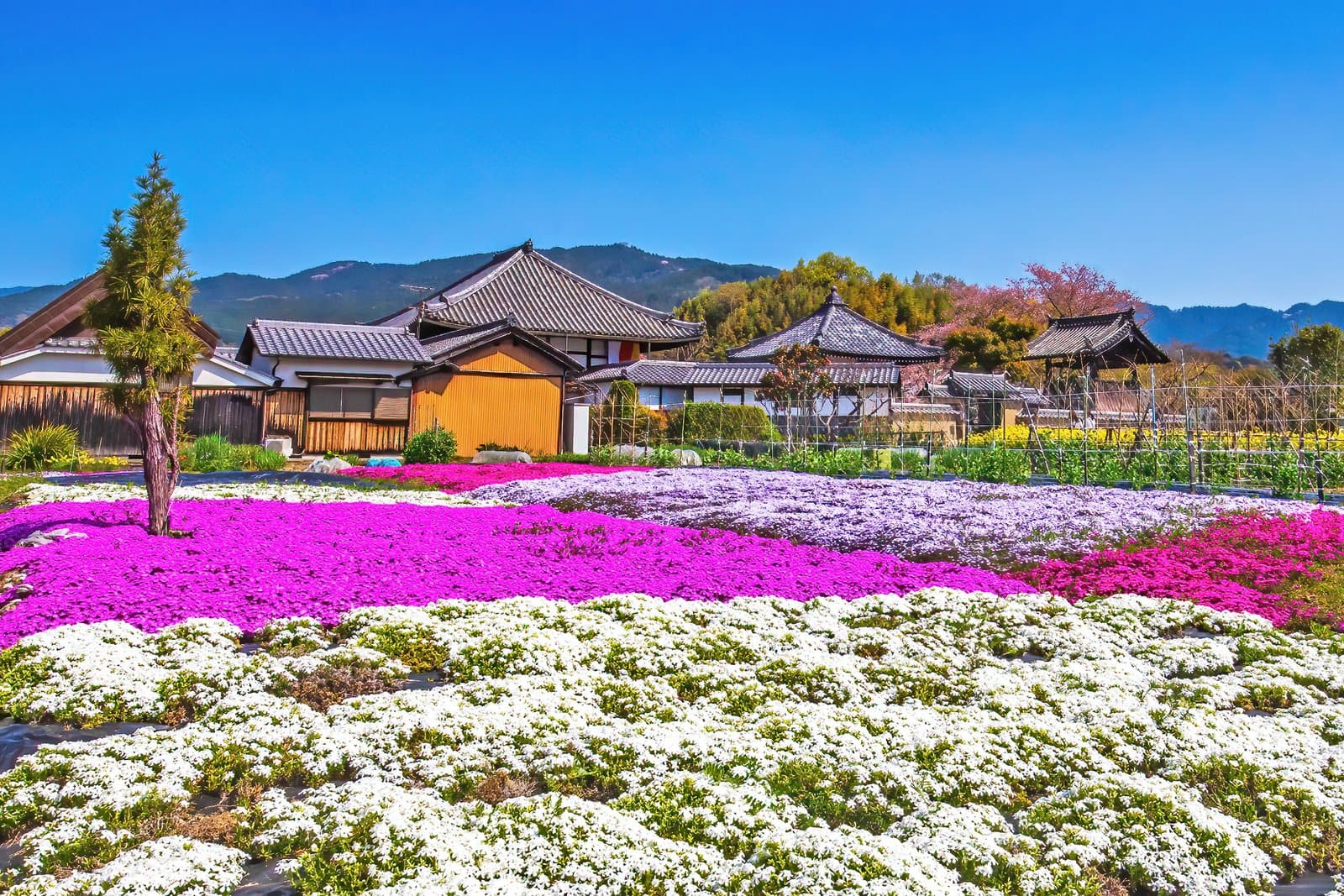 Photo: Photo ACAsuka, NaraAsuka-dera TempleCompleted in Suiko 4 (596) at the wish of Soga no Umako, a protector of Buddhism, as Japan's first full-scale temple. Most buildings burned in the Kamakura period and the present main hall was rebuilt in the Edo period. Its principal image, the bronze seated Shaka Nyorai (Important Cultural Property) known as the Asuka Daibutsu, dates from the Asuka period and is Japan's oldest Buddhist statue.Official check: 26 Sept 2026
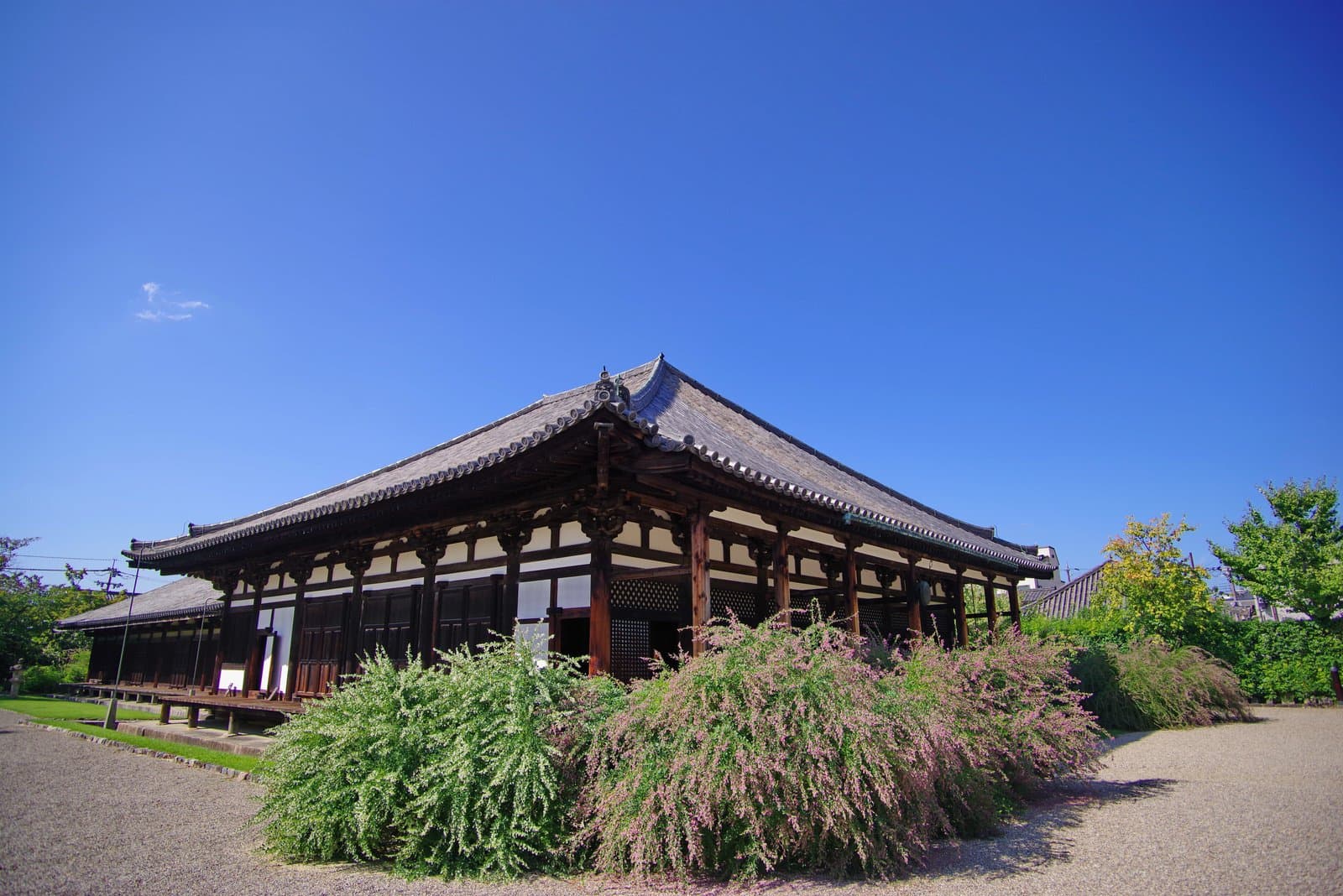 Photo: Photo ACNara, NaraGango-ji TempleA temple whose predecessor is Asuka-dera (Hoko-ji), said to be Japan's oldest temple, built by Soga no Umako. Once one of the Seven Great Temples of Nara covering most of today's Naramachi, it now keeps only the Gokurakudo and Zenshitsu, remains of the monks' quarters, where some pillars and tiles older than the buildings are still used. The Horinkan houses the Five-storey Miniature Pagoda (National Treasure) and other works. Part of the World Heritage "Historic Monuments of Ancient Nara".Official check: 26 Sept 2026
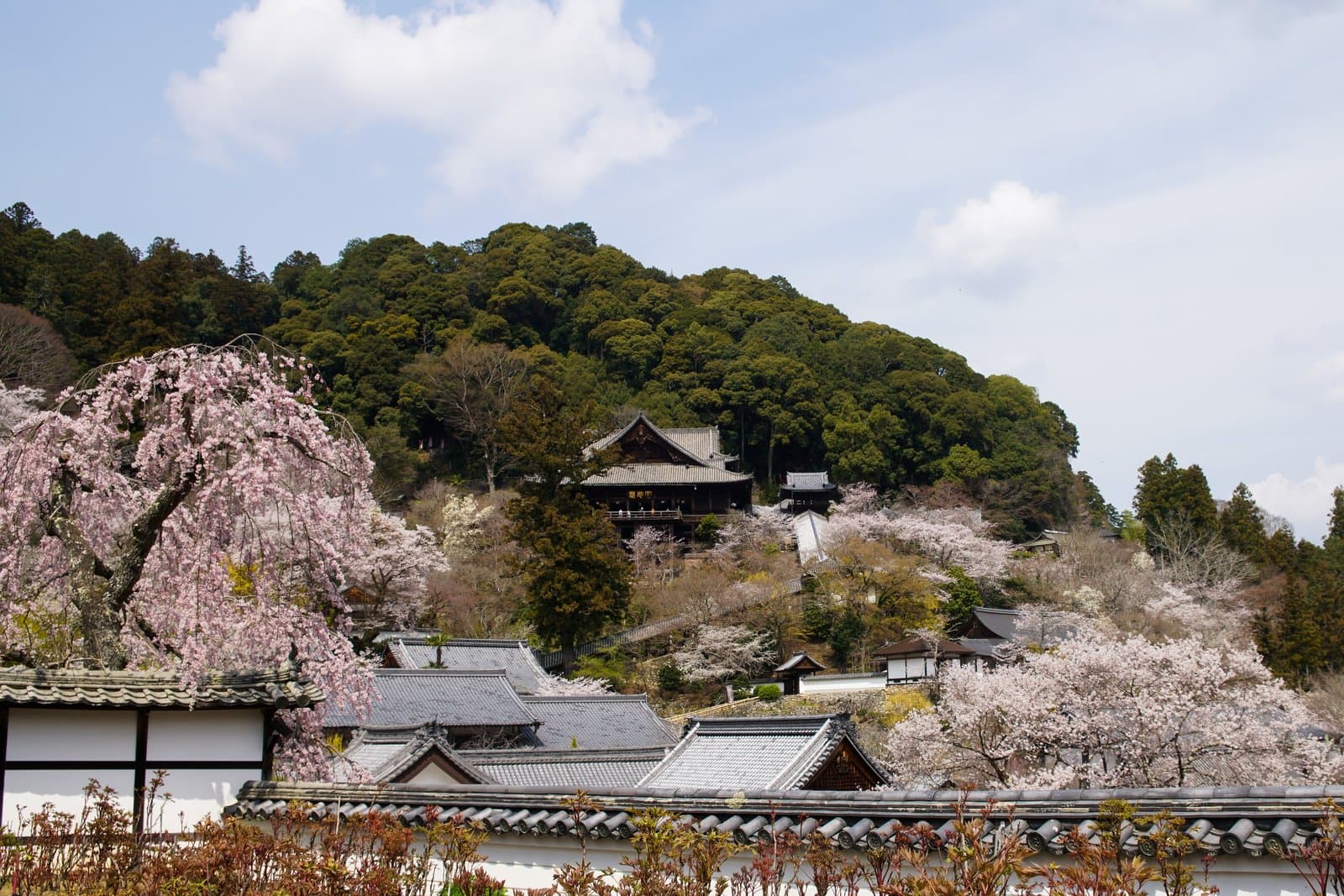 Photo: Photo ACSakurai, NaraHase-dera TempleA temple said to date from 686, whose main hall on stilts (a National Treasure) was rebuilt by Tokugawa Iemitsu; the covered stairway of 399 steps to the hall, hung with oval lanterns, is lined with peonies from late April to early May.Official check: 26 Sept 2026
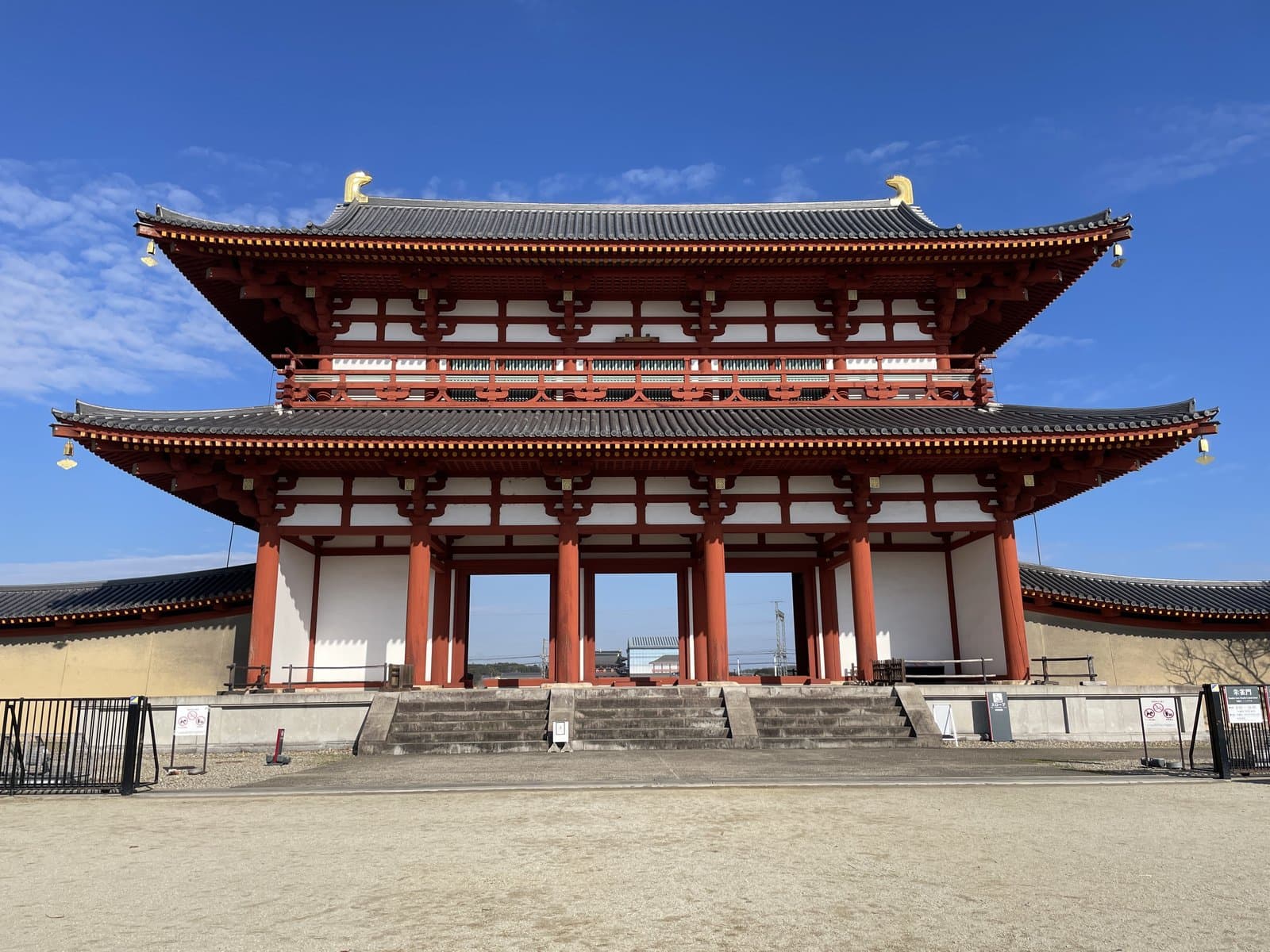 Photo: Photo ACNara, NaraHeijo Palace SiteThe site of the palace at the heart of Heijo-kyo, the capital from 710; restored buildings such as the First Imperial Audience Hall and Suzaku Gate stand across the grounds, and Suzakumon Hiroba (2018) offers guidance, food and shops.Official check: 26 Sept 2026
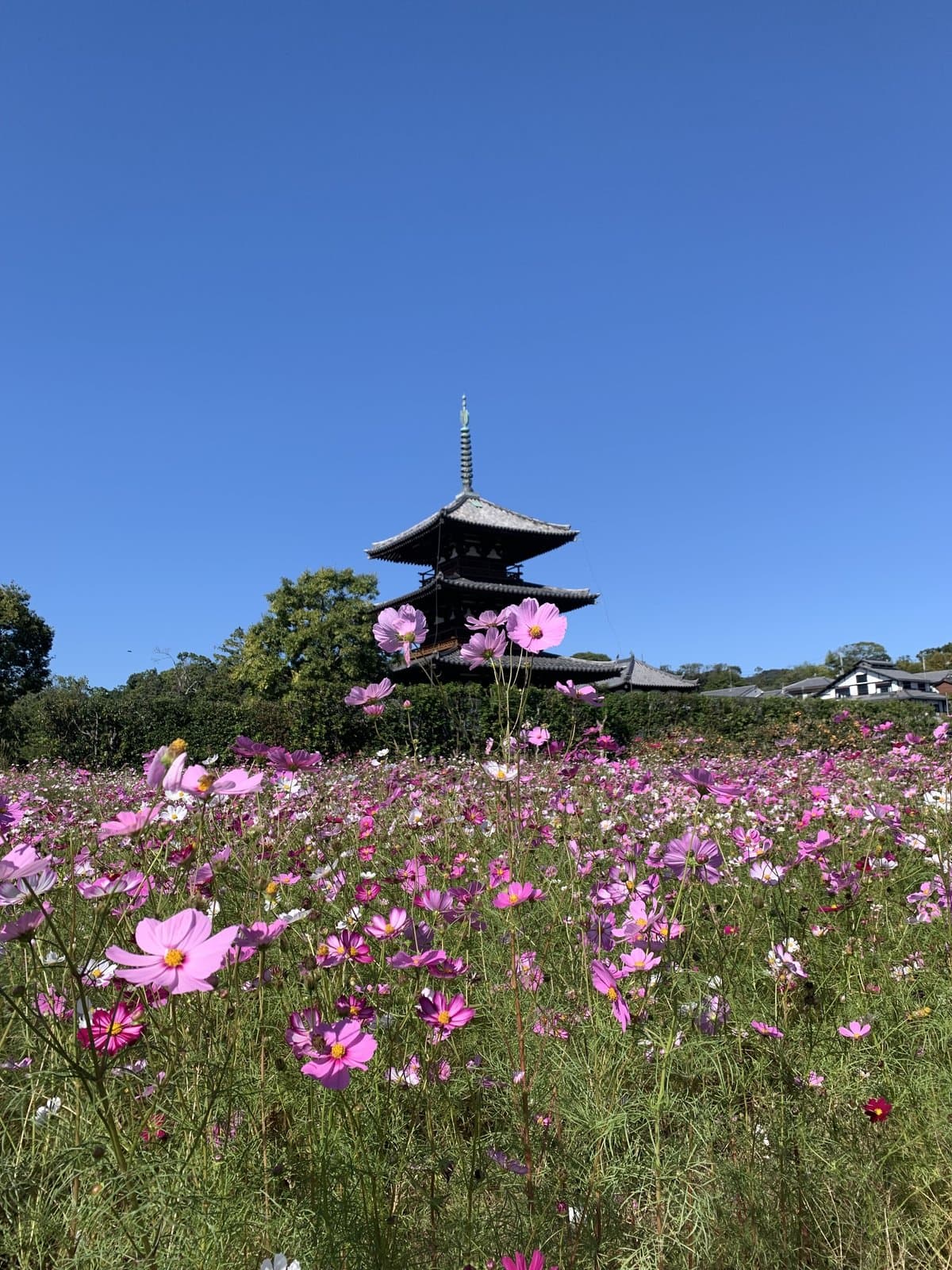 Photo: Photo ACIkaruga, NaraHokiji TempleFounded in 638; Prince Shotoku's son Yamashiro no Oe is said to have turned the Okamoto Palace, linked with the prince, into a temple following his father's last wishes. It was a great temple with a full set of halls, with the main hall and pagoda placed the opposite way round from Horyuji, a layout called the Hokiji style. The only building left from its founding is the three-storey pagoda (National Treasure, about 24 m high), completed in 706, the oldest surviving three-storey pagoda in Japan; the present main hall, bell tower and golden hall were rebuilt in the Edo period. (World Heritage)Official check: 27 Sept 2026
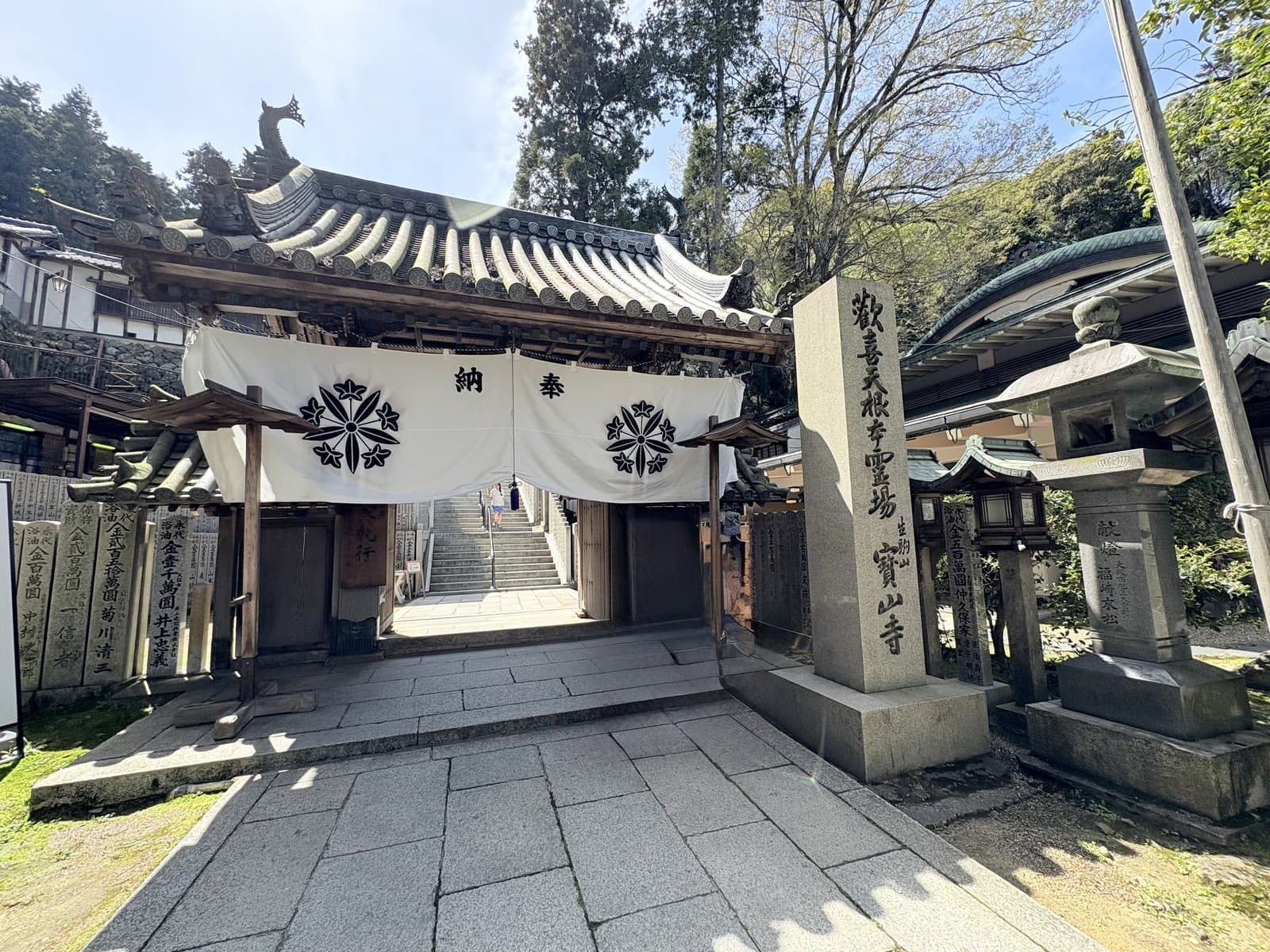 Photo: Photo ACIkoma, NaraHozanji TempleOriginally opened as a place of mountain ascetic practice by En no Gyoja and Kukai, the temple was revived in 1678 by Hozan Tankai, who enshrined Kangiten. Against a great rock face called the Hannya Cave stand the main hall, Shoten hall, Tahoto pagoda and ema hall, and the Shishikaku (Important Cultural Property), with its coloured glass, was built in 1884 as a guest house. It is known as a temple of popular faith, affectionately called "Ikoma no Shoten-san".Official check: 27 Sept 2026
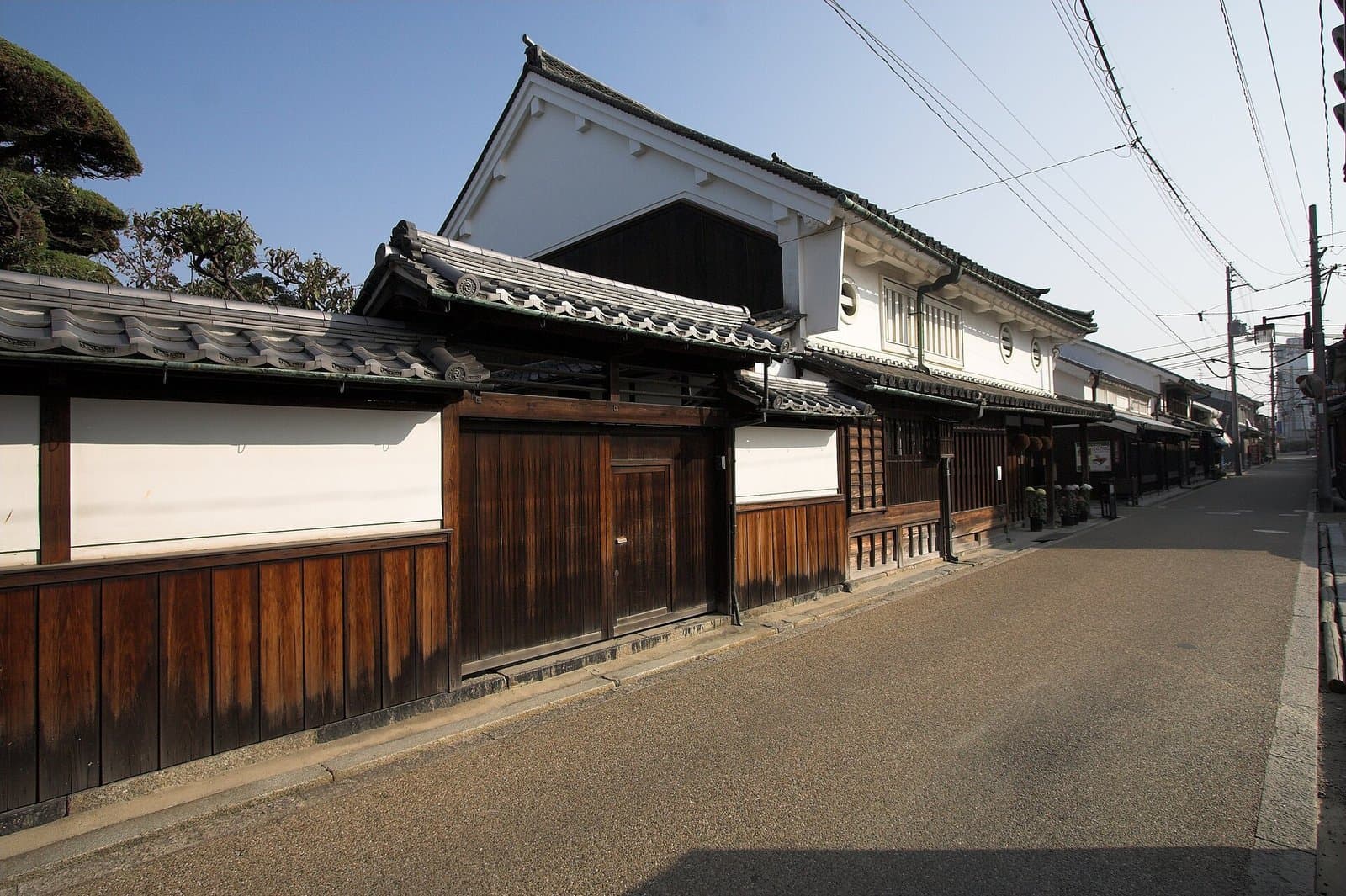 Photo: ignis / Wikimedia Commons, CC BY-SA 3.0 (resized)Kashihara, NaraImaicho Historic TownscapeA temple town that grew around the Jodo Shinshu temple Shonen-ji in the Sengoku period and was granted self-government privileges like Sakai in the Edo period, prospering so much that it was said "seven-tenths of Yamato's money is in Imai". Traditional houses and merchant homes from the Edo period crowd an area 600 m by 300 m, eight of them Important Cultural Properties; a national Important Preservation District for Groups of Traditional Buildings.Official check: 26 Sept 2026
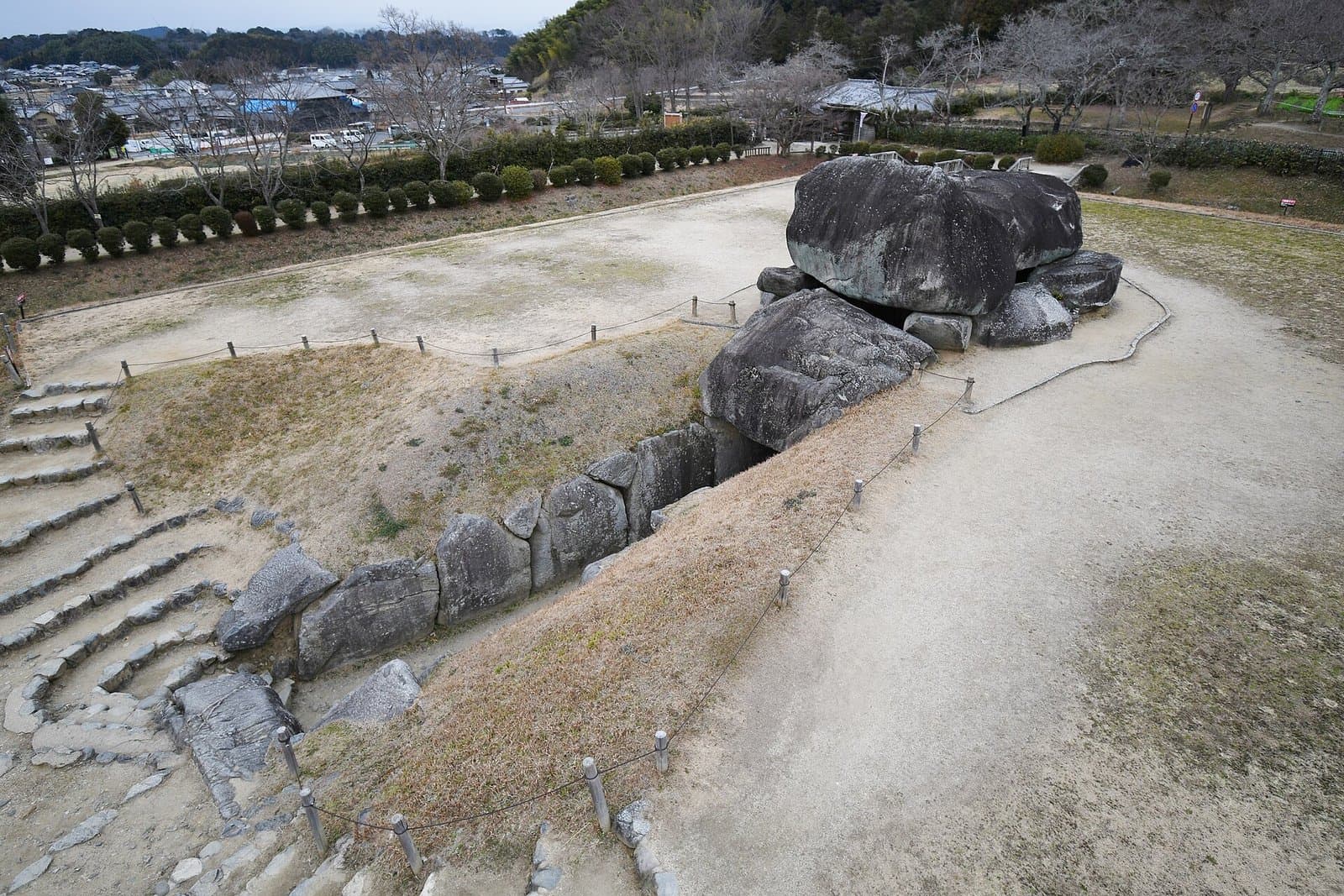 Photo: Saigen Jiro / Wikimedia Commons, CC0 (resized)Asuka, NaraIshibutai Kofun, AsukaA 6th-century tomb built from 30 huge stones, one of Japan's largest stone chambers, left bare after its earth mound was lost; the heaviest ceiling stone weighs about 77 tonnes, and it is widely thought to be the tomb of Soga no Umako.Official check: 26 Sept 2026
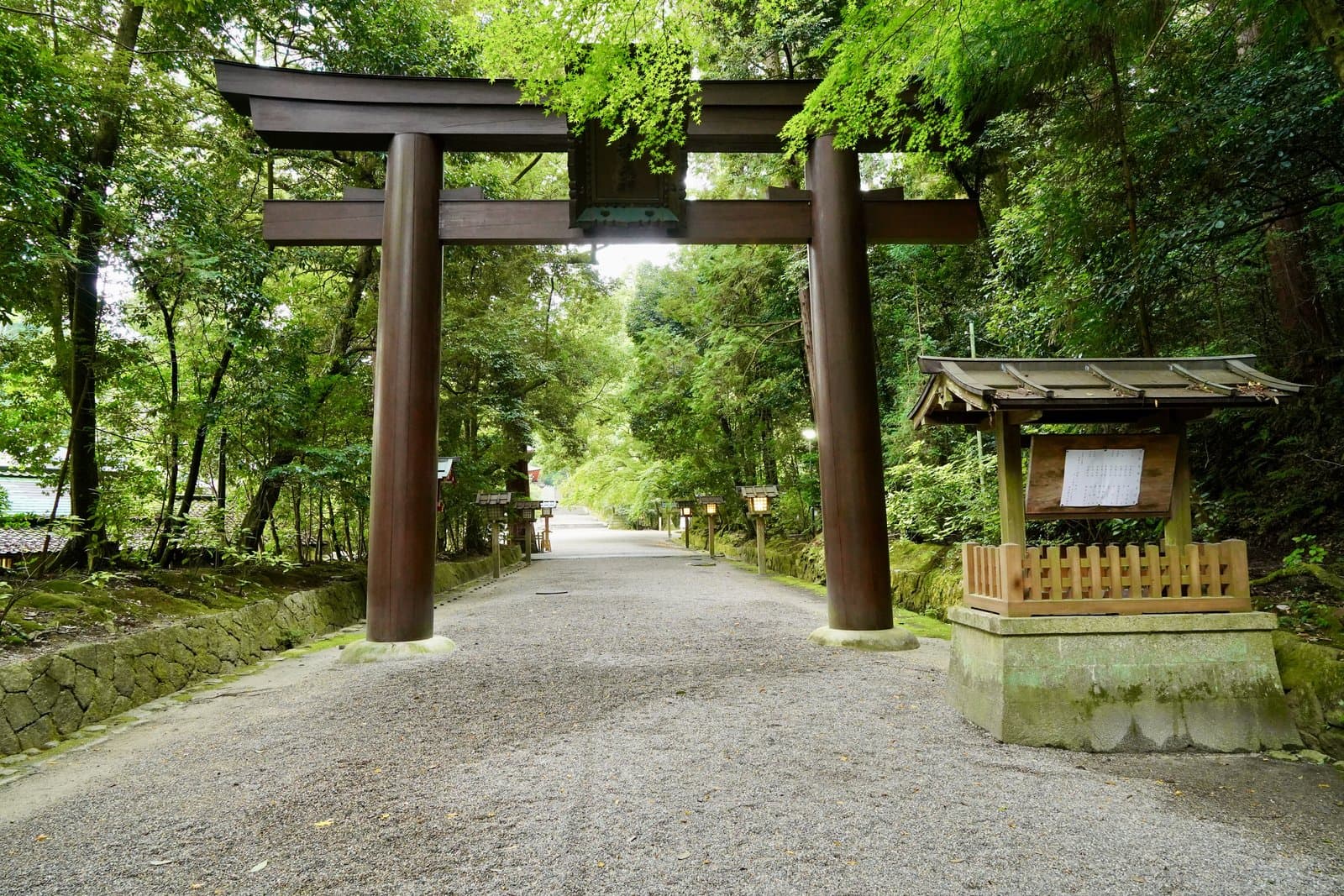 Photo: Photo ACTenri, NaraIsonokami Jingu ShrineOne of Yamato's oldest shrines, the tutelary shrine of the ancient Mononobe clan, recorded as having been an armoury of the Yamato court. It once had no main hall and enshrined a sacred sword and treasures buried deep in the ground; when the forbidden area behind the worship hall was excavated in the early Meiji era, the sword and many blades, mirrors and beads were found. The worship hall (National Treasure) is the oldest of its kind in shrine architecture.Official check: 26 Sept 2026
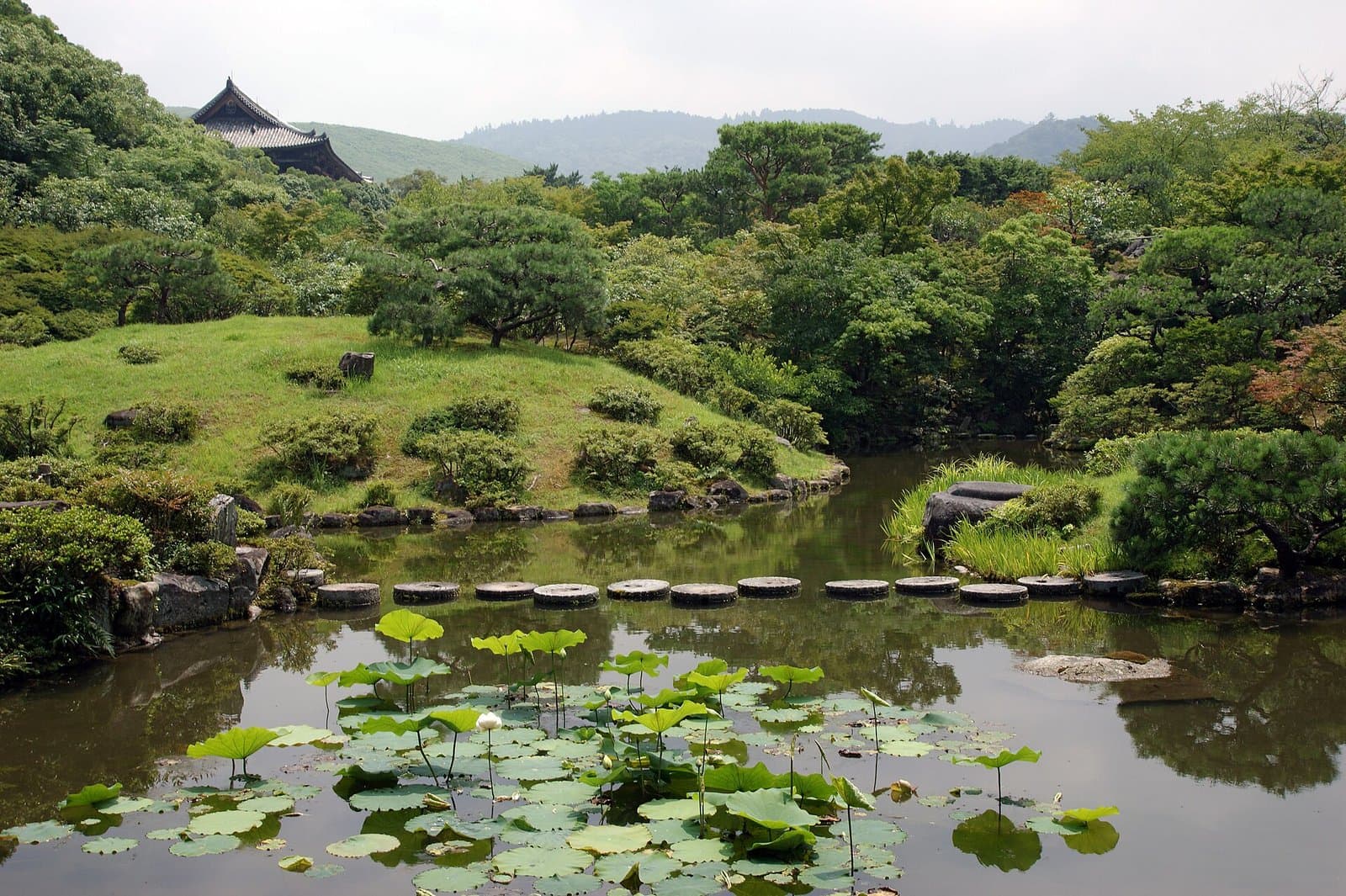 Photo: 663highland / Wikimedia Commons, CC BY 2.5 (resized)Nara, NaraIsuien GardenA strolling pond garden of about 11,000 m² next to Todai-ji, in two parts: the front garden by an Edo-period merchant and the rear garden (Meiji period) that borrows Mt. Wakakusa and Todai-ji's Great South Gate as scenery; the Neiraku Museum is inside.Official check: 26 Sept 2026
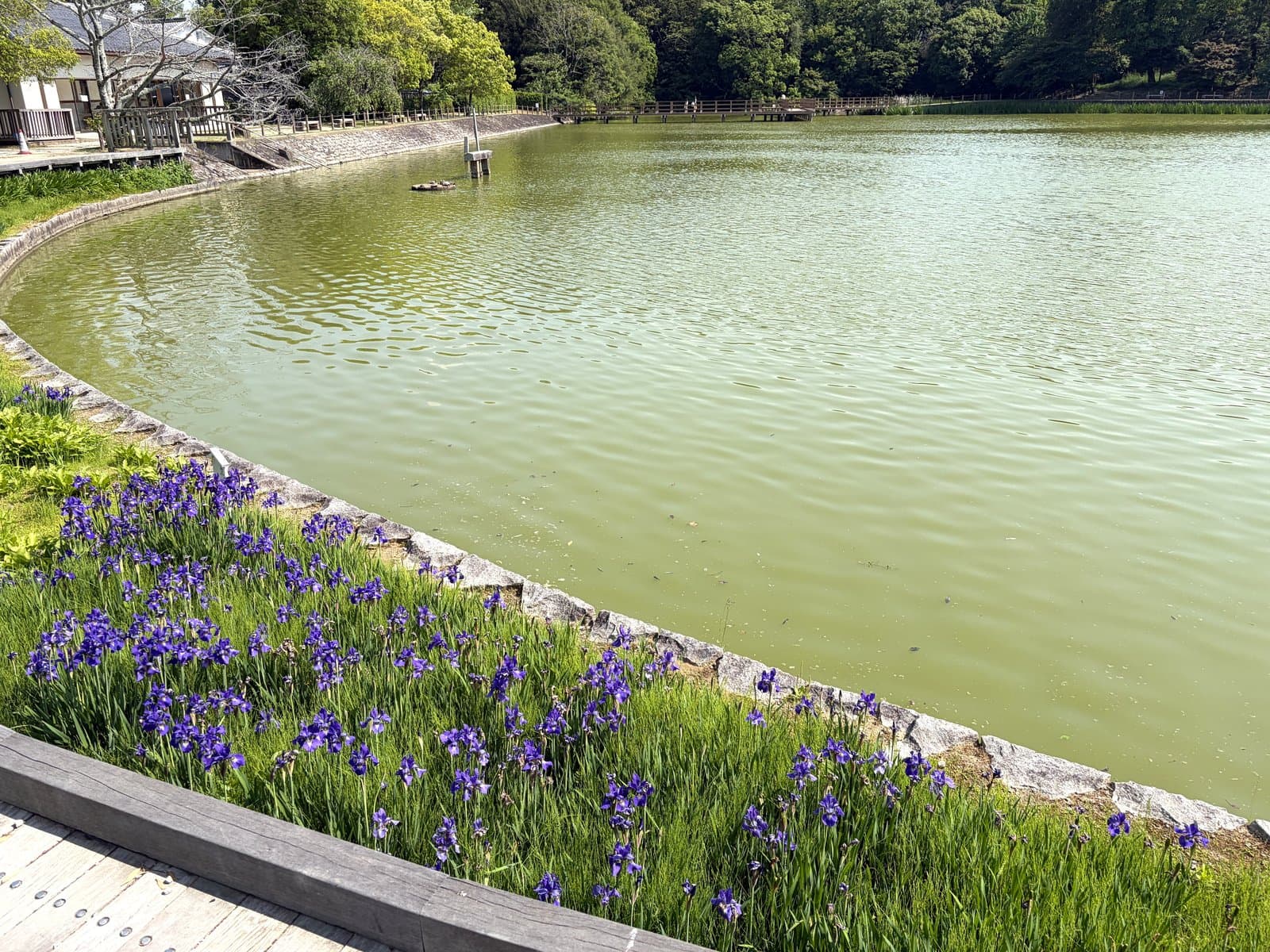 Photo: Photo ACKashihara, NaraKashihara Jingu ShrineFounded in Meiji 23 (1890) at the south-east foot of Mt. Unebi, the place where, according to the Nihon Shoki, Emperor Jimmu built his palace and was enthroned; it enshrines the first emperor and his empress. The main hall (Important Cultural Property) was moved from the Naishidokoro of the Kyoto Imperial Palace, and the sacred grounds cover 530,000 square metres, including a forest park and Fukada Pond.Official check: 26 Sept 2026
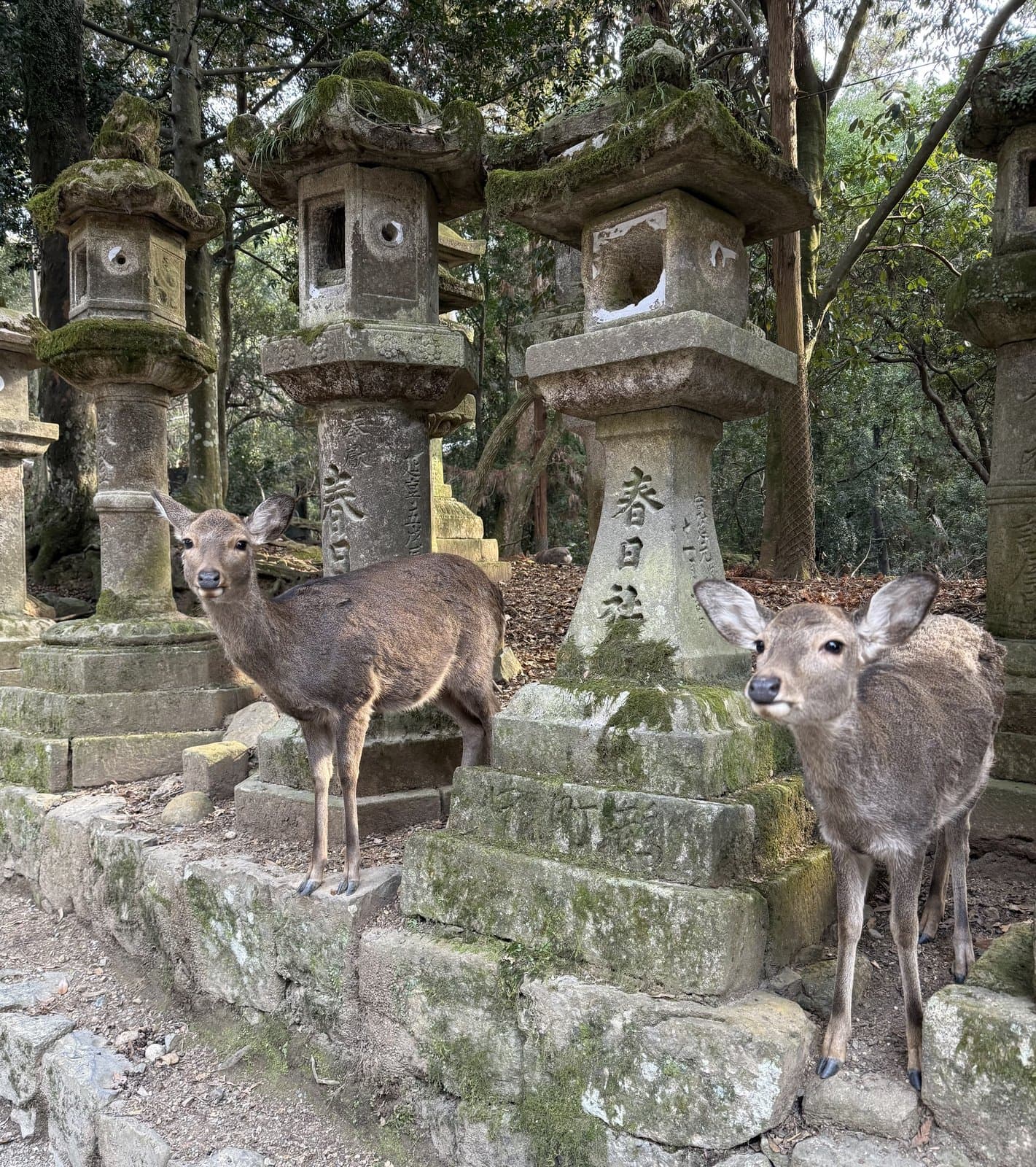 Photo: Photo ACNara, NaraKasuga Taisha ShrineA shrine whose halls were built here in 768, with vermilion buildings and countless stone lanterns donated over the centuries; famous for wisteria, it has a treasure hall and a Manyo botanical garden, backed by the protected Kasugayama Primeval Forest. Part of the World Heritage site.Official check: 26 Sept 2026
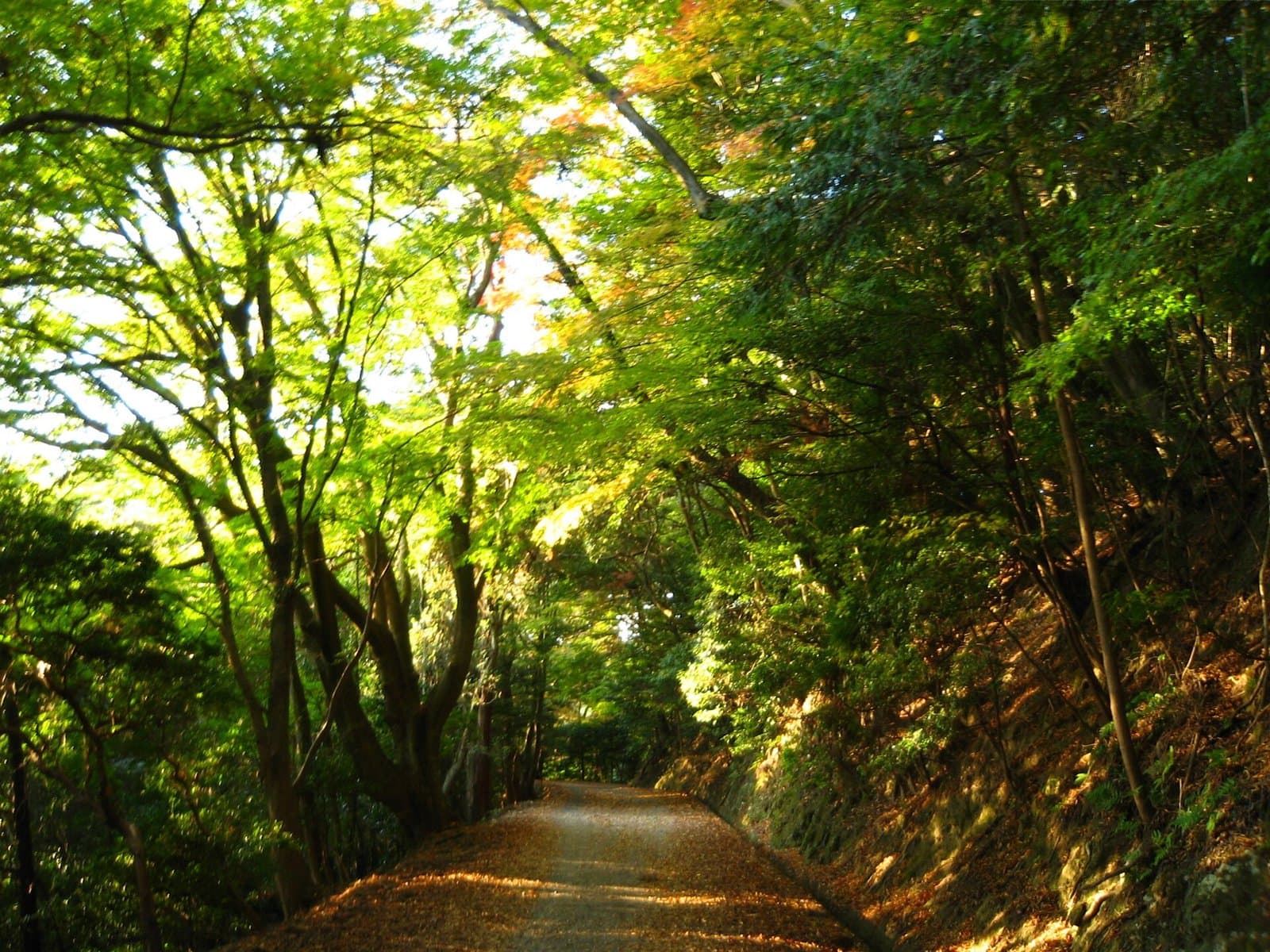 Photo: Vera46 / Wikimedia Commons, CC BY 2.0 (resized)Nara, NaraKasugayama Primeval ForestA sacred forest protected as the holy ground of Kasuga Taisha since hunting and logging were banned over 1,100 years ago; a World Cultural Heritage Site and a Special Natural Monument. A walk on the Kasuga Okuyama trail from Mizuya Shrine is recommended: the north route from Kasuga Taisha to the top of Mt. Wakakusa is about 3 km (about 40 minutes), and the south route from the summit back to Kasuga Taisha is about 8 km (about 2 hours).Official check: 26 Sept 2026
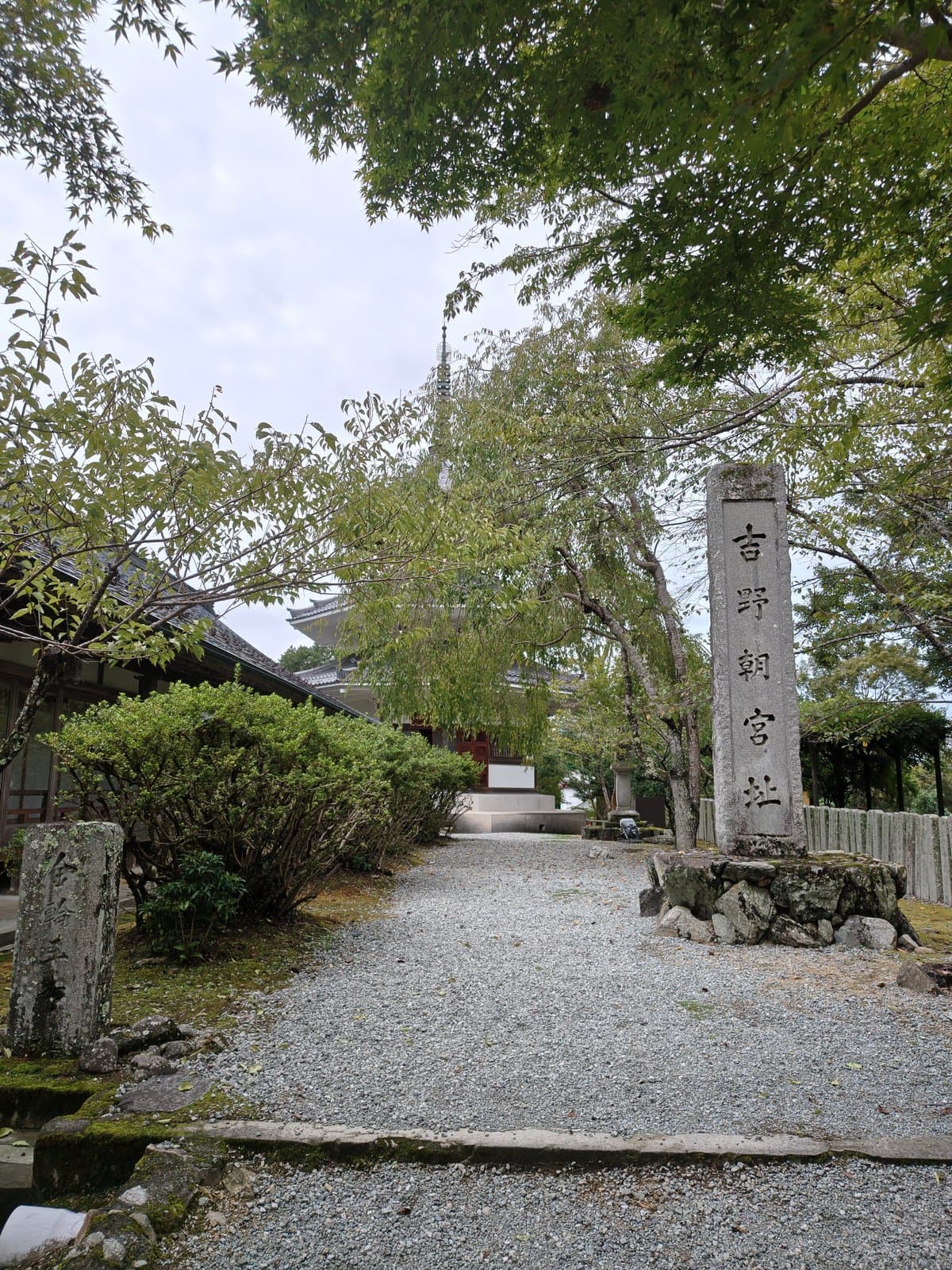 Photo: Photo ACYoshino, NaraKinpusenji TempleRising high on the ridge of Mt. Yoshino, Kinpusenji was founded in the Asuka period by En no Gyoja, the founder of Shugendo. The present hall, rebuilt in the Azuchi-Momoyama period, is the largest old wooden building after the Great Buddha Hall of Todaiji. The principal images are three Zao Gongen, each a 7 m statue kept as a hidden image in one of the largest shrines in Japan. The Shuhoden hall screens a VR film about the temple. (World Heritage)Official check: 27 Sept 2026
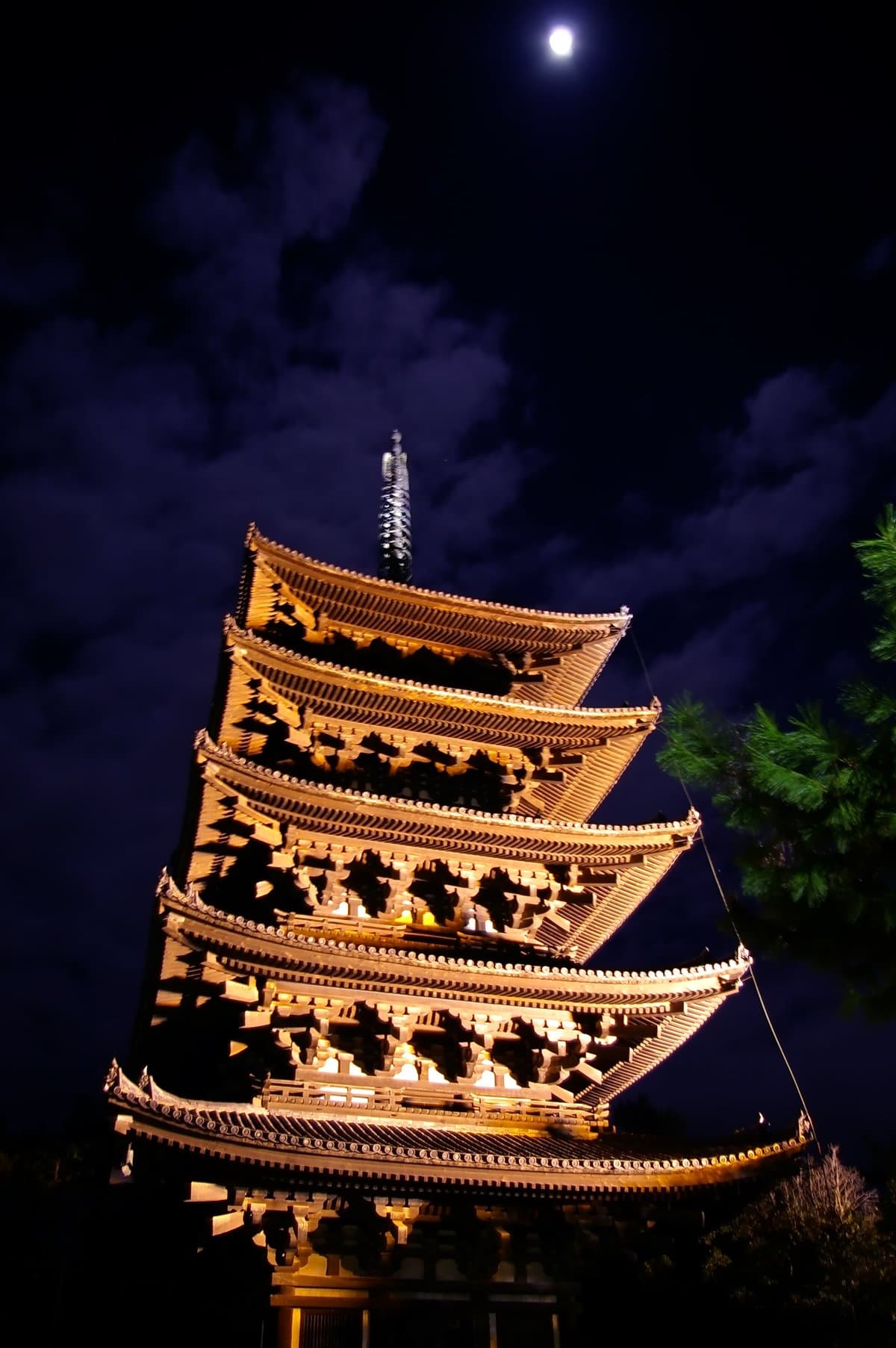 Photo: Tomomarusan / Wikimedia Commons, CC BY 2.5 (resized)Nara, NaraKofuku-ji TempleHead temple of the Hosso sect and the Fujiwara clan temple, moved here in 710; its Central Golden Hall was rebuilt in 2018 after about 300 years, and the National Treasure Museum holds many masterpieces of Buddhist sculpture. Part of the World Heritage site.Official check: 26 Sept 2026
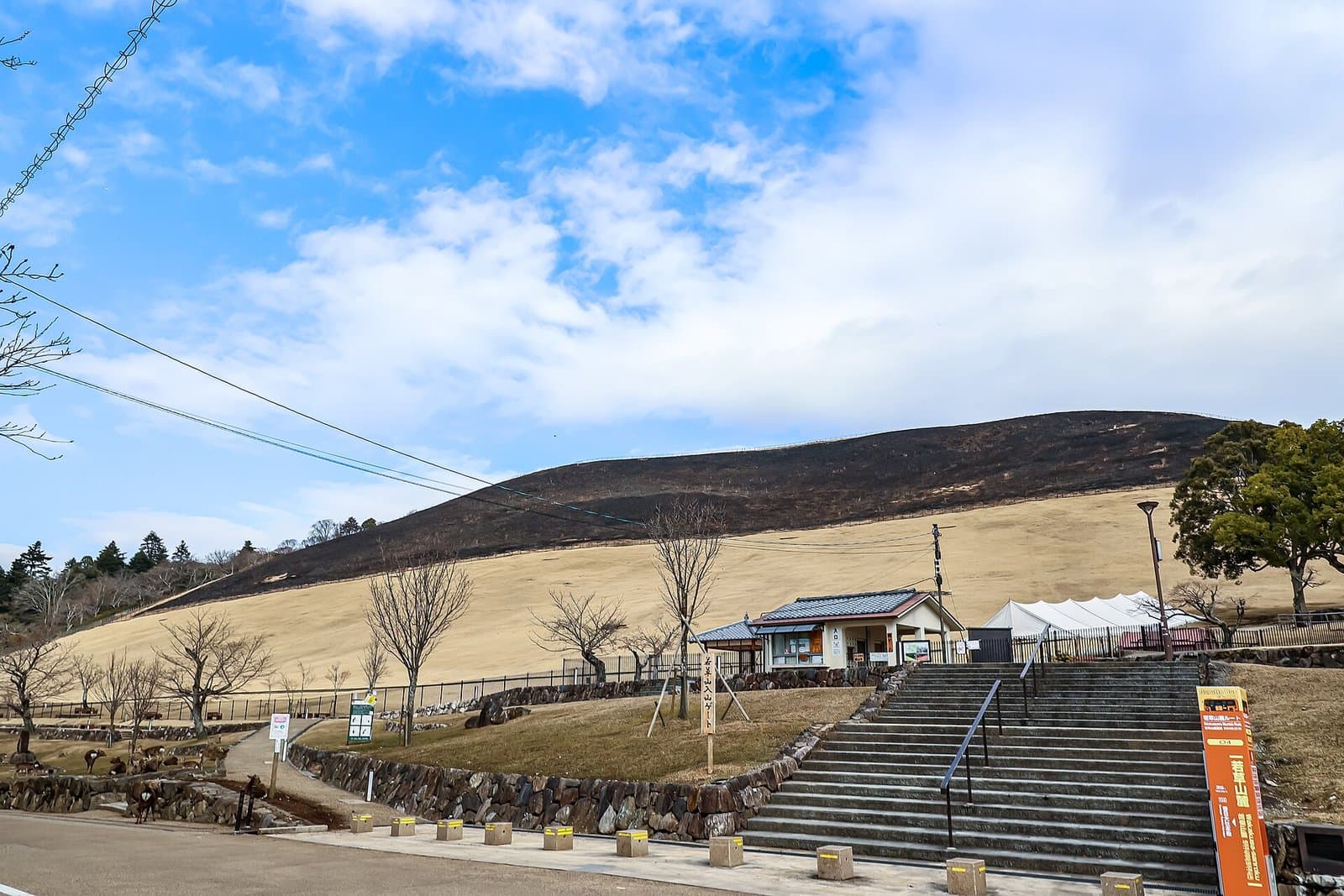 Photo: Naokijp / Wikimedia Commons, CC BY-SA 4.0 (resized)Nara, NaraMt. WakakusaA gentle 342 m hill covered in lawn, also called Mt. Mikasa for its three rounded tiers, with views over the Great Buddha Hall and Nara Park; its night view was chosen as one of Japan's three new great night views, and the grass is burned every early spring.Official check: 26 Sept 2026
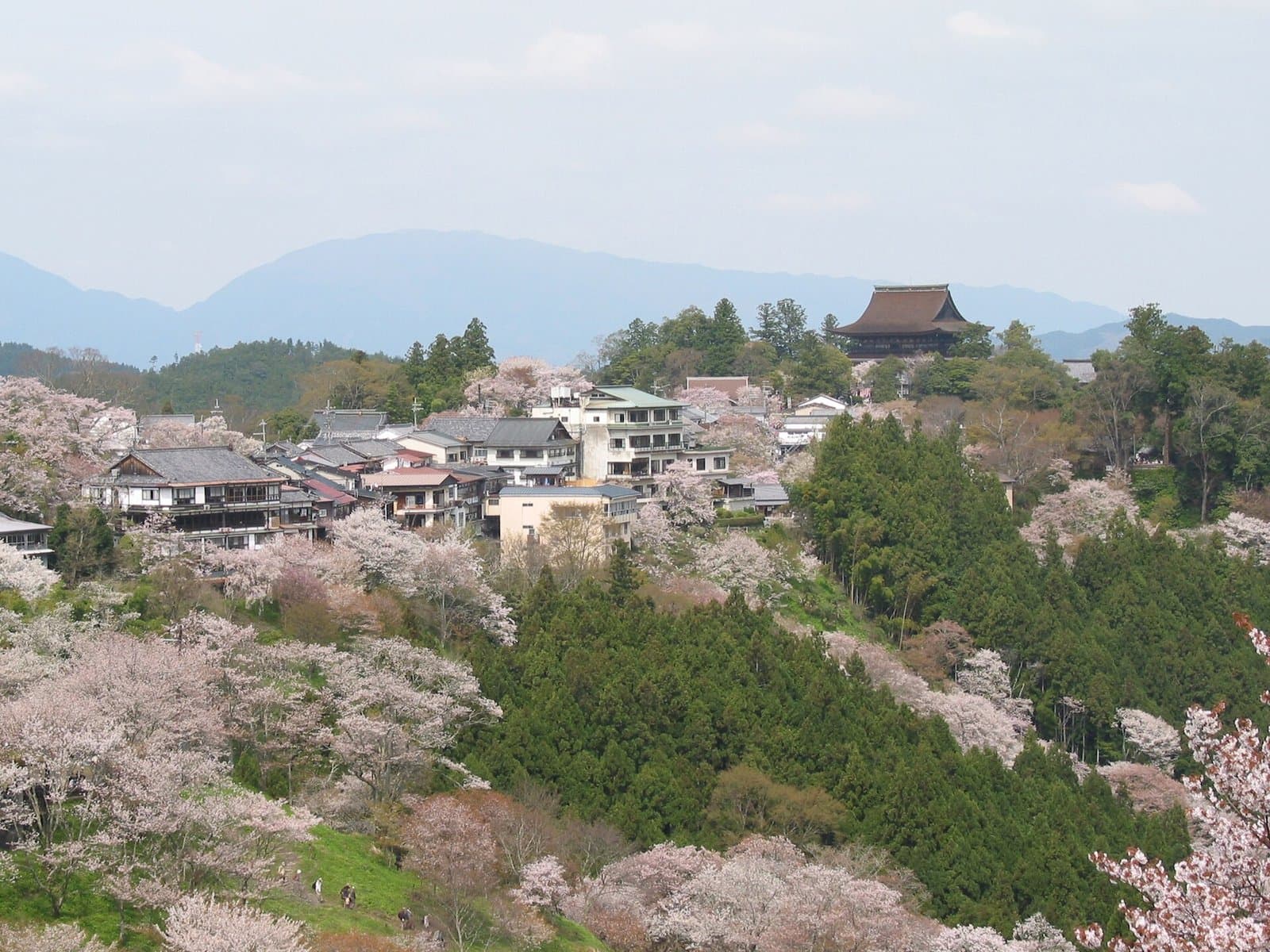 Photo: Tawashi2006 / Wikimedia Commons, CC BY 2.1 JP (resized)Yoshino, NaraMt. YoshinoA ridge of about 8 km at the north end of the Omine range, famous for some 30,000 cherry trees that bloom in turn from Shimo-senbon up to Oku-senbon from early to late April; it was a sacred place of mountain ascetics and the seat of the Southern Court.Official check: 26 Sept 2026
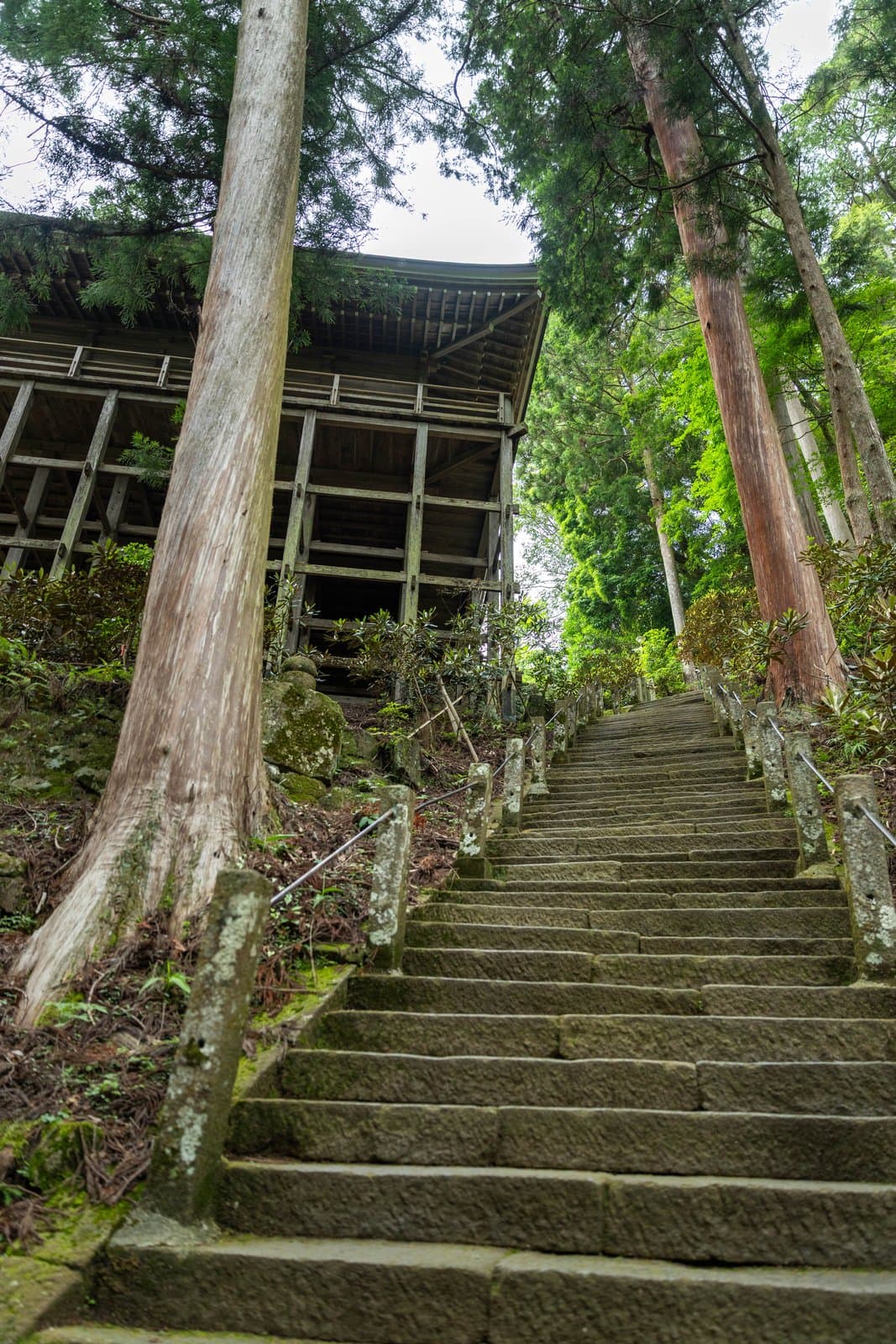 Photo: Photo ACUda, NaraMuro-ji TempleFounded at the end of the Nara period by Kenkyo, a priest of Kofuku-ji, and restored in the Genroku era with the support of Keishoin, mother of the fifth shogun Tokugawa Tsunayoshi. Unlike Mt. Koya, which barred women, it allowed women to worship and became known as "Women's Koya". Its Kondo and main hall are National Treasures, and the Kondo houses five wooden Jogan-period Buddhist statues.Official check: 26 Sept 2026
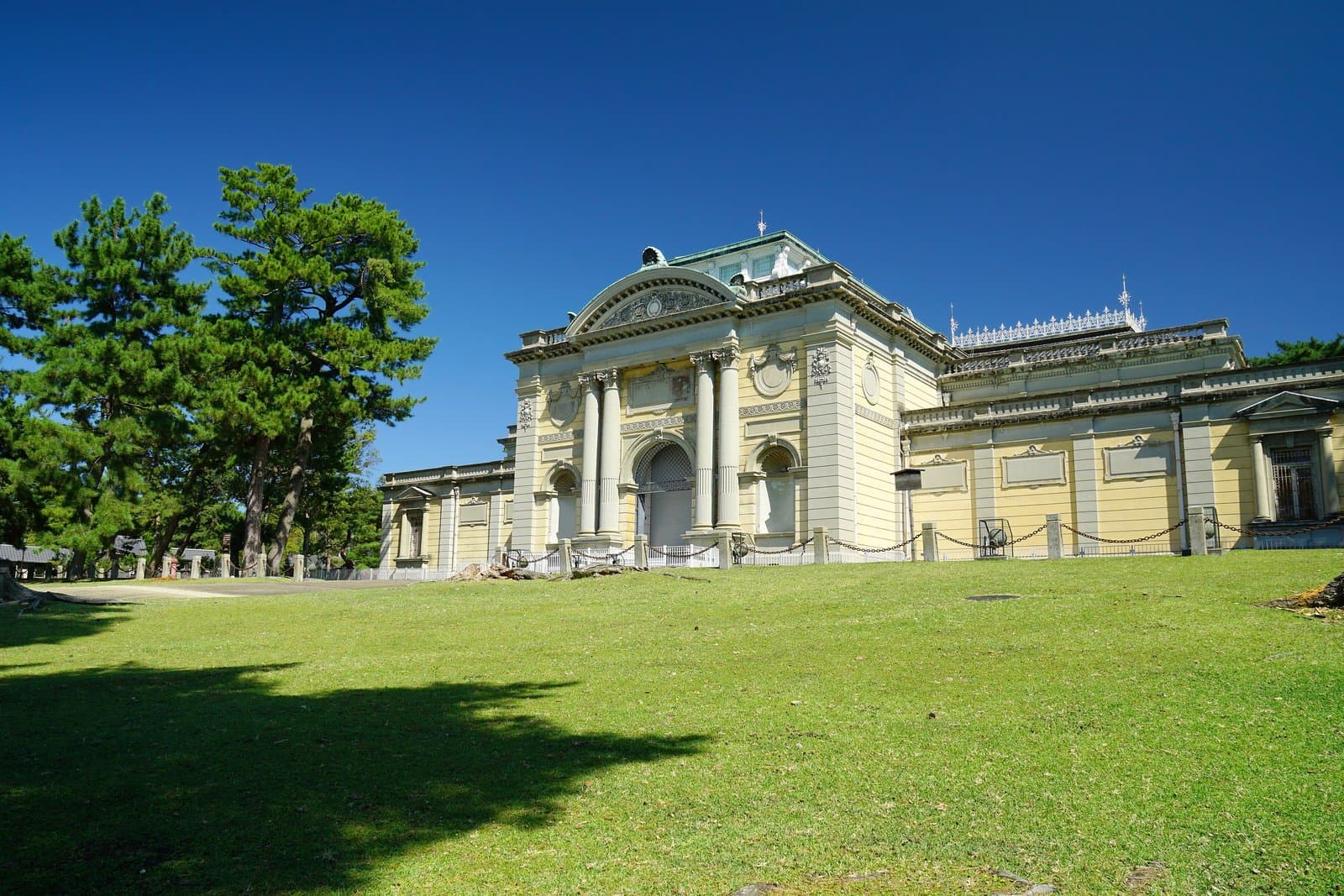 Photo: 663highland / Wikimedia Commons, CC BY 2.5 (resized)Nara, NaraNara National MuseumA museum in a corner of Nara Park next to Todai-ji, Kofuku-ji and Kasuga Taisha, where you can enjoy Buddhist art and the history and culture behind it. The Buddhist Sculpture Hall, completed in Meiji 27 (1894), was Nara's first full-scale Western building (Important Cultural Property).Official check: 26 Sept 2026
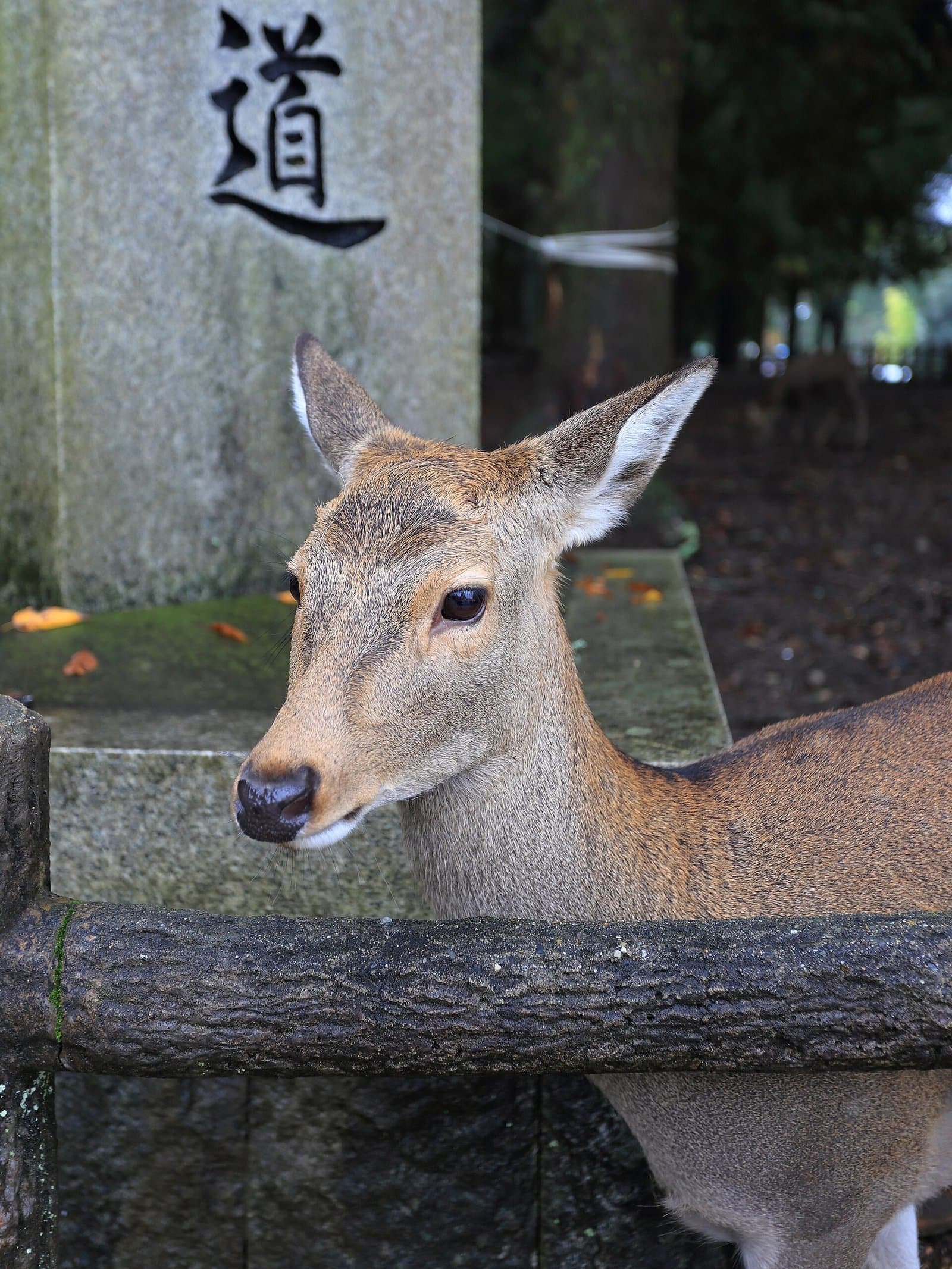 Photo: Martin Falbisoner / Wikimedia Commons, CC BY-SA 4.0 (resized)Nara, NaraNara ParkA vast park about 4 km east to west on the east side of Nara, taking in the grounds of Kasuga Taisha, Kofuku-ji and Todai-ji, where about 1,300 deer roam among lawns and old pines.Official check: 26 Sept 2026
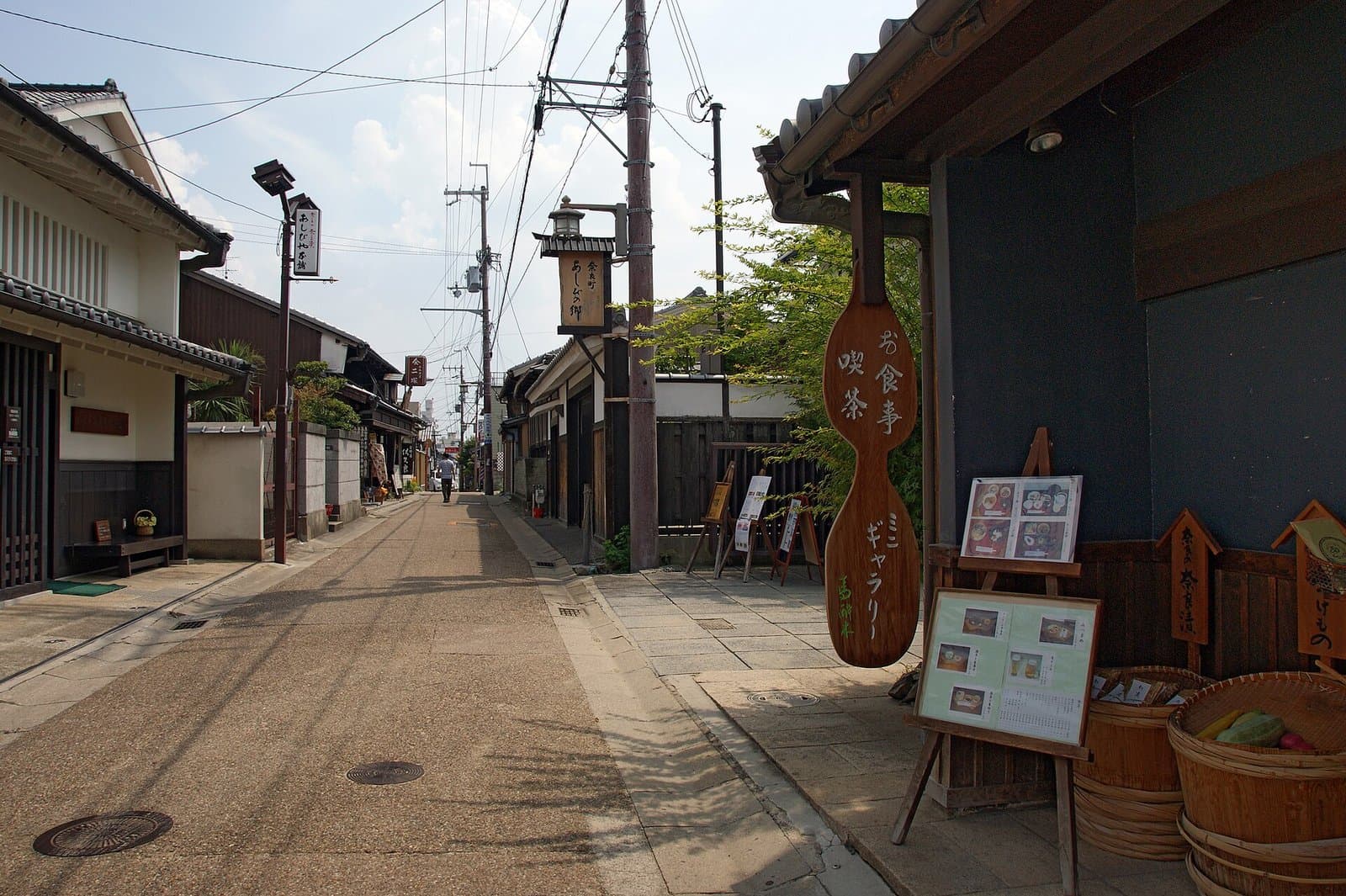 Photo: 663highland / Wikimedia Commons, CC BY 2.5 (resized)Nara, NaraNaramachiThe area around the former grounds of Gango-ji, lined with townhouses from the Edo to Meiji periods; "Naramachi" is not an official place name. It has small museums such as the Naramachi Koshi-no-Ie lattice house.Official check: 26 Sept 2026
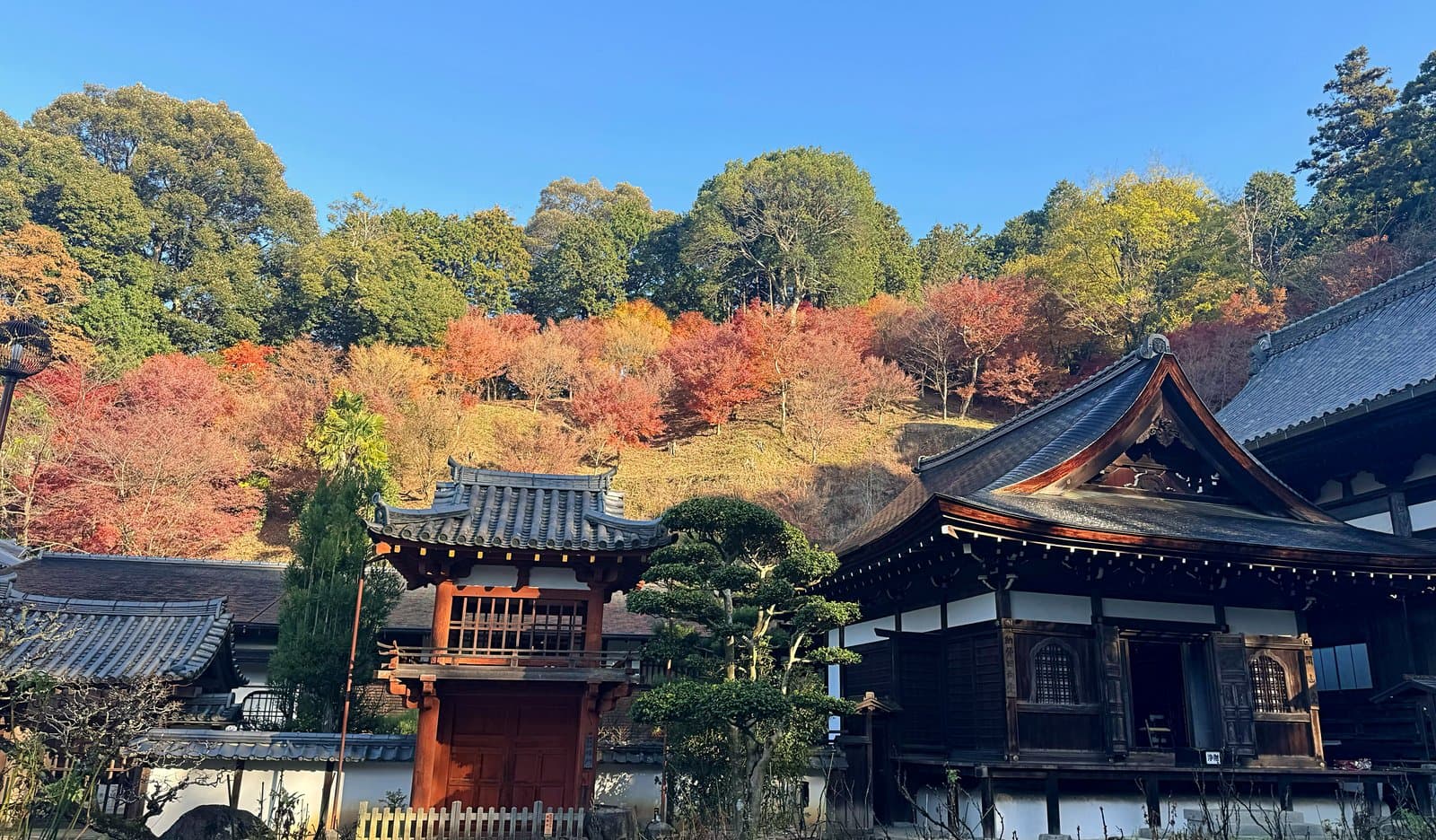 Photo: Photo ACAsuka, NaraOka-dera TempleFounded in Tenji 2 (663) by the priest Gien, who received Prince Kusakabe's Oka Palace; its formal name is Ryugai-ji. On the hillside stand an Edo-period study hall and Nio gate (both Important Cultural Properties) and the main hall. The principal image, a seated Nyoirin Kannon from the Tenpyo period (Important Cultural Property), is 4.6 m tall, Japan's largest clay statue. It is the 7th temple of the Saigoku 33 Kannon pilgrimage.Official check: 26 Sept 2026
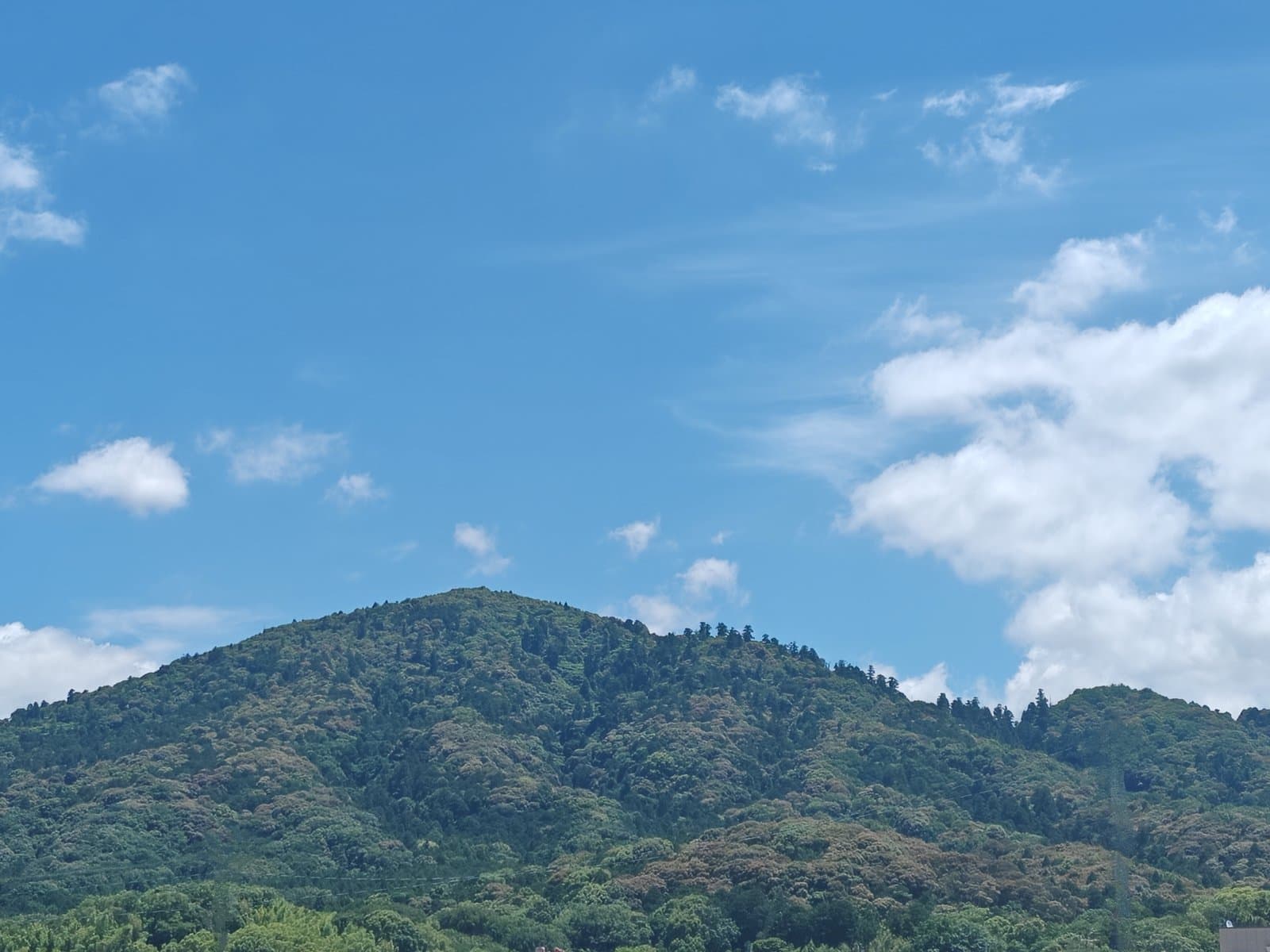 Photo: Photo ACSakurai, NaraOmiwa ShrineAlso called Miwa Myojin, said to be Japan's oldest shrine. It has no main hall, because Mt. Miwa behind it is the object of worship itself, preserving an ancient form of faith; the mountain is worshipped through the Mitsu-torii (Important Cultural Property) behind the worship hall (Important Cultural Property, rebuilt in 1664 by Tokugawa Ietsuna). The deity is Omononushi-no-okami.Official check: 26 Sept 2026
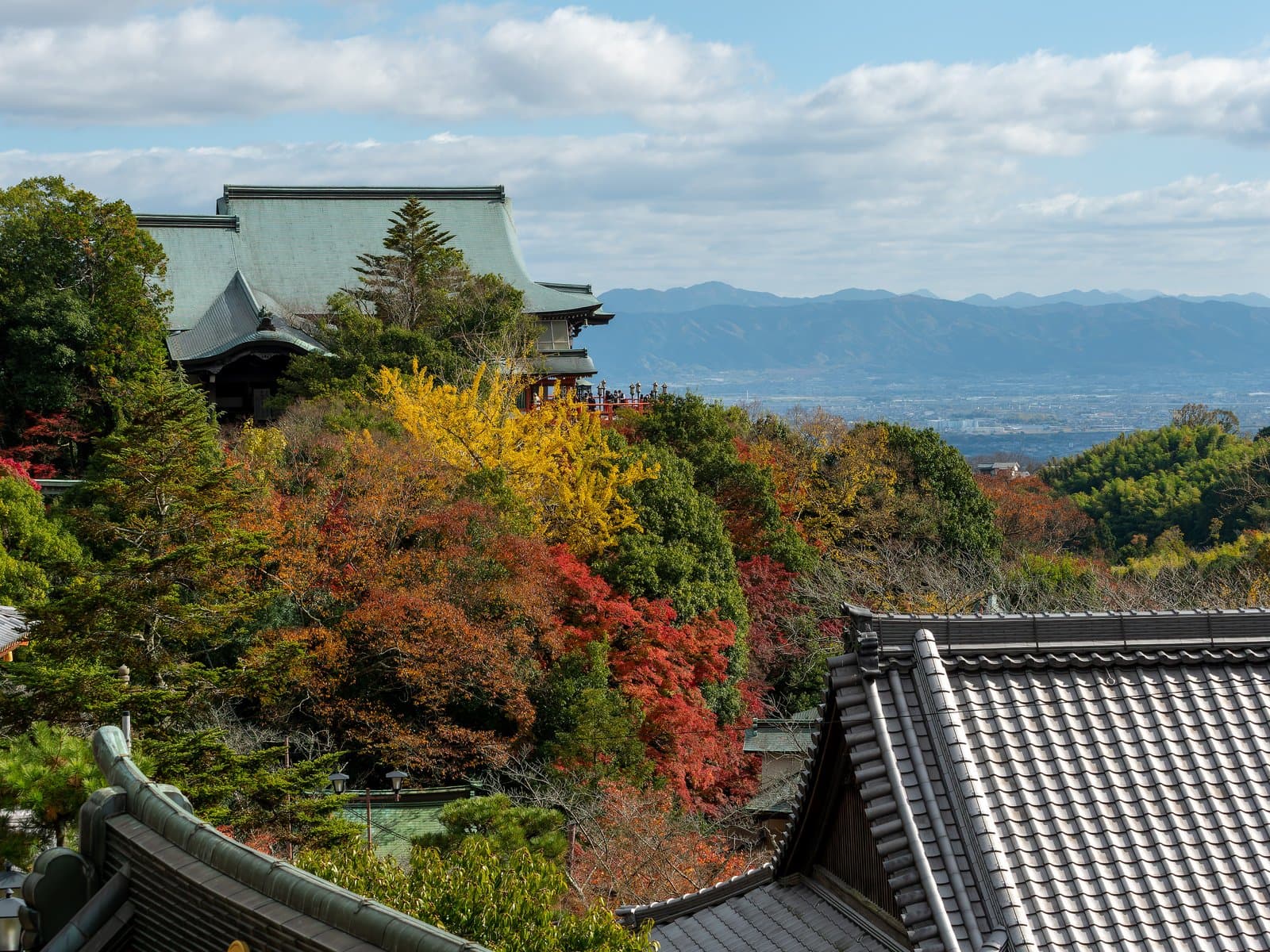 Photo: Photo ACHeguri, NaraShigisan Chogosonshiji TempleFounded by Prince Shotoku in 587, it drew the faith of warriors from the Heian period. In the Warring States period Matsunaga Hisahide built Shigisan Castle; attacked by Oda Nobunaga, Hisahide took his own life and the temple burned, and it was later restored by Toyotomi Hideyori. The mountain's origin lies in the legend that the prince saw Bishamonten appear in the year, day and hour of the tiger, so papier-mache tigers can be seen all over the grounds, where dozens of halls stand, and the main hall looks out over the Nara Basin. The National Treasure "Shigisan Engi" scrolls are shown for only about two weeks from late October.Official check: 27 Sept 2026
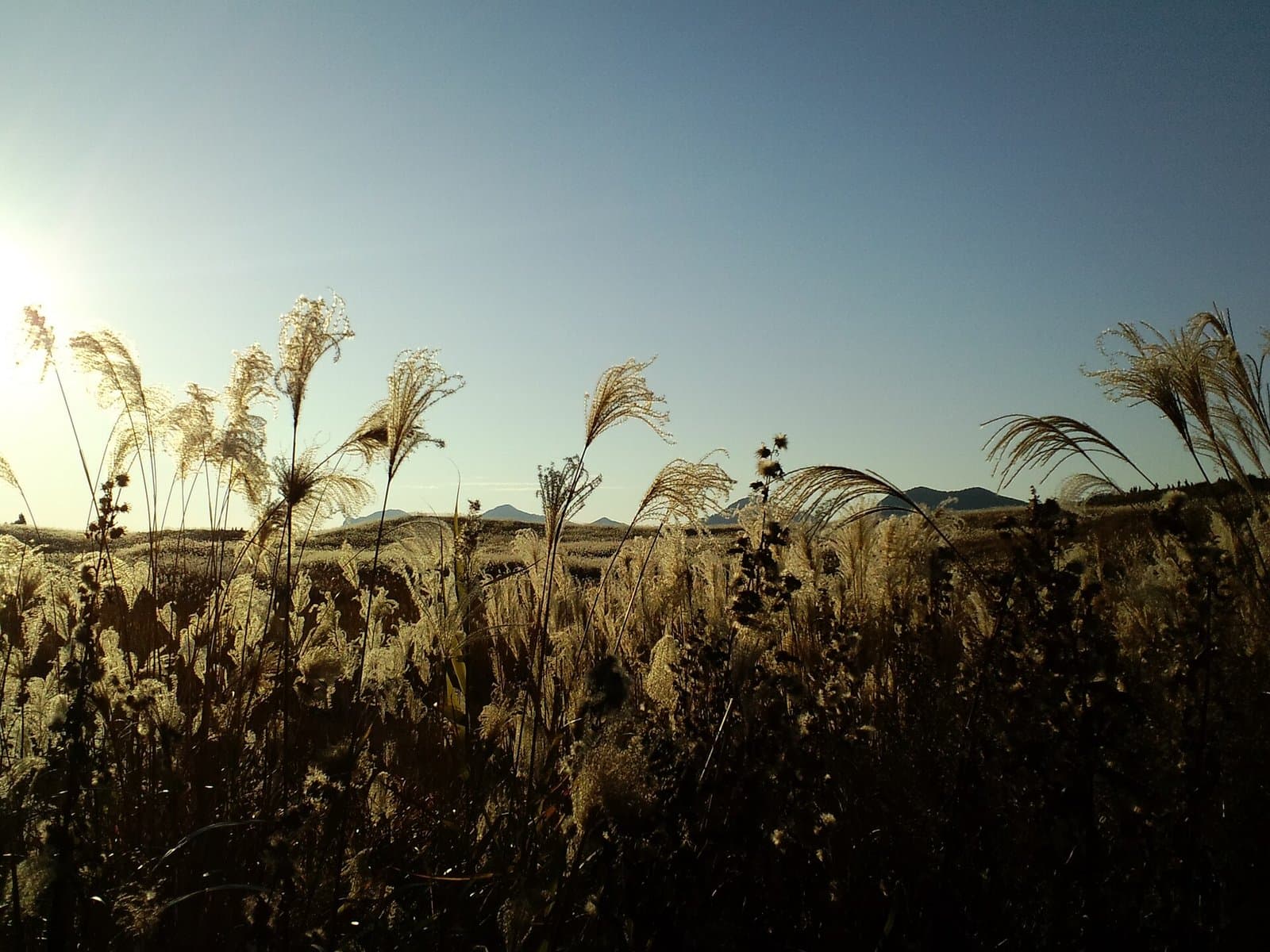 Photo: YOSHIFUMI OGISO / Wikimedia Commons, CC BY-SA 3.0 (resized)Soni, NaraSoni PlateauA vast plateau (849 m high) at the foot of Mt. Kuroso, covered with silver grass in autumn; its pastoral scenery is popular with hikers.Official check: 26 Sept 2026
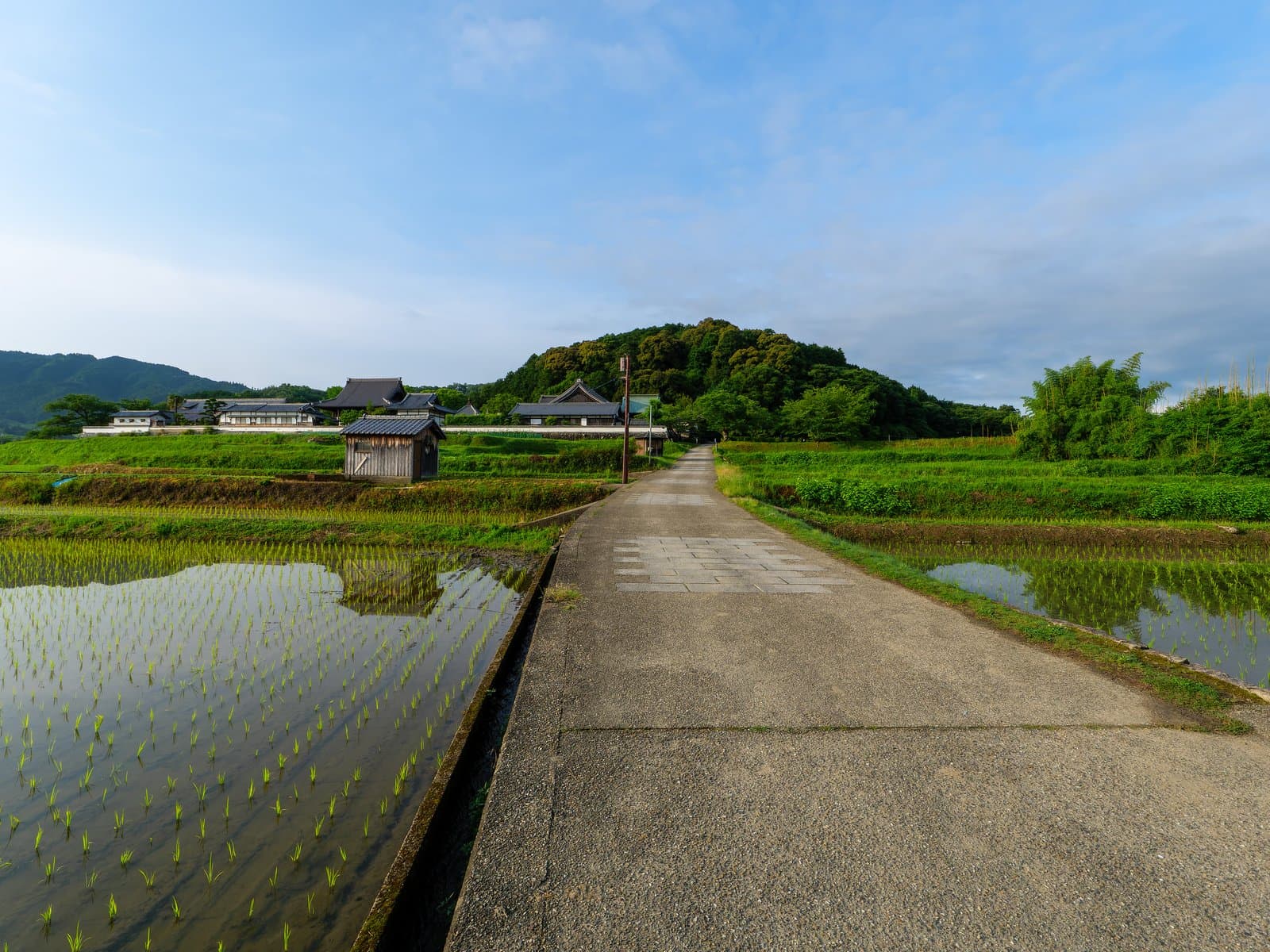 Photo: Photo ACAsuka, NaraTachibanadera TempleIts founding date is unknown; it first appears in records in 680. Said to be the birthplace of Prince Shotoku and one of the seven temples he founded, it was once a great temple with 66 halls. Today only a few buildings remain, such as the main hall (Taishiden) rebuilt in the Edo period. Treasures include a Muromachi-period seated statue of Prince Shotoku (Important Cultural Property) and the "Nimenseki", a stone carved with two faces of good and evil. From early September to late October about 150 cotton rose and confederate rose shrubs bloom in the grounds.Official check: 27 Sept 2026
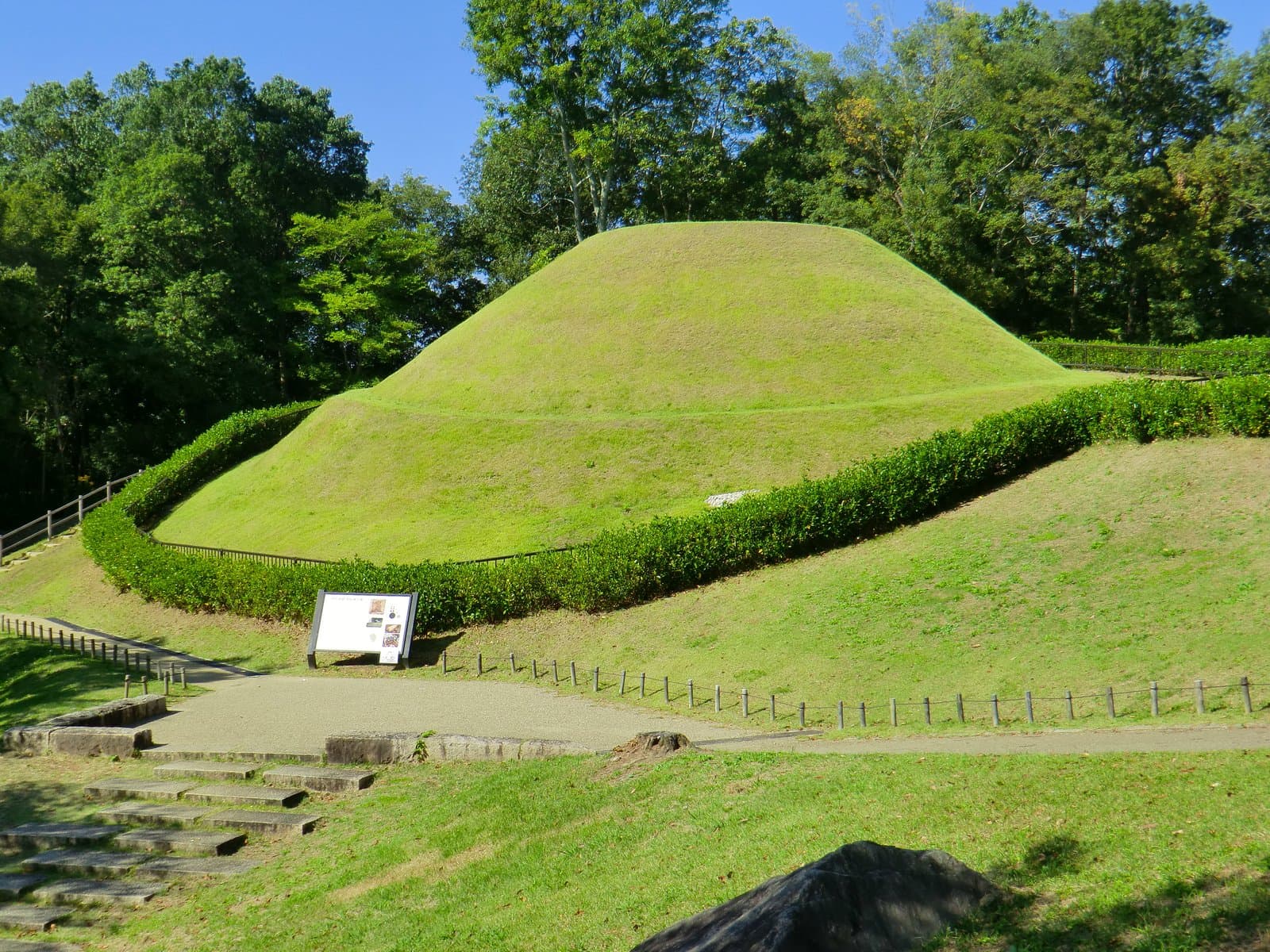 Photo: 8-hachiro / Wikimedia Commons, CC BY-SA 4.0 (resized)Asuka, NaraTakamatsuzuka TumulusA small round tumulus 18 m across and 5 m high. In March 1972 (Showa 47) colour murals (National Treasure) were found in the stone chamber and drew attention as the greatest discovery of the post-war era, showing the Blue Dragon, White Tiger, Black Tortoise, groups of figures and a star chart. The interior is sealed for conservation and cannot be visited; the neighbouring Takamatsuzuka Mural Hall shows detailed copies and a model of the chamber.Official check: 26 Sept 2026
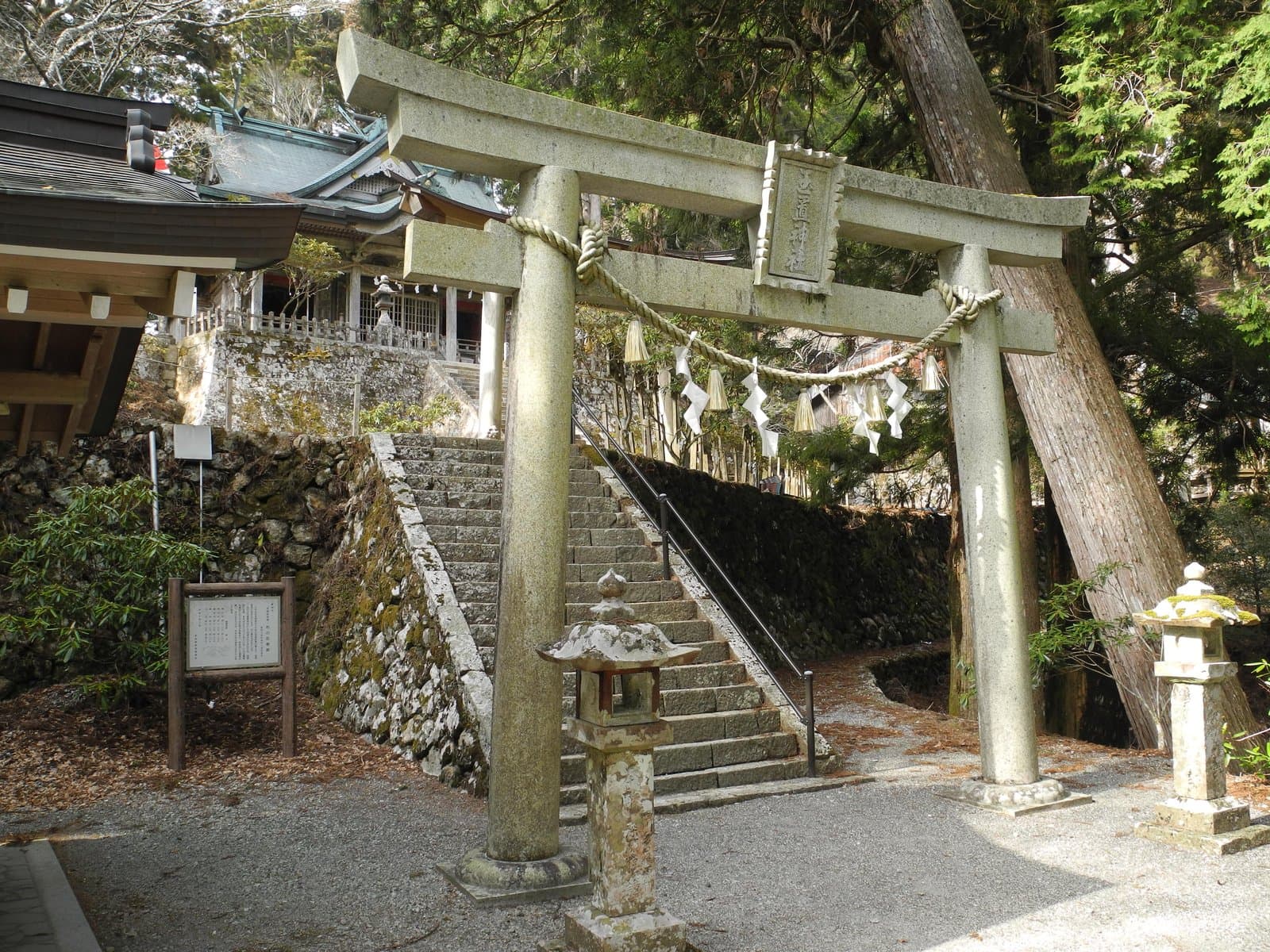 Photo: Kansai explorer / Wikimedia Commons, CC BY 3.0 (resized)Totsukawa, NaraTamaki ShrineAn ancient shrine near the summit of Mt. Tamaki (1,076 m). In the Edo period it was said to be the inner sanctuary of the three Kumano shrines and was a great Shugendo sacred site. Giant trees said to be 3,000 years old grow in the grounds, including the "Jindai-sugi" cedar, and the shrine office has 70 richly coloured sliding doors of single cedar boards painted with dragons, tigers and landscapes by Kano school painters such as Tachibana Yasuharu. At the Tamaishi shrines, a sacred stone is worshipped directly without a hall, an ancient form of worship.Official check: 27 Sept 2026
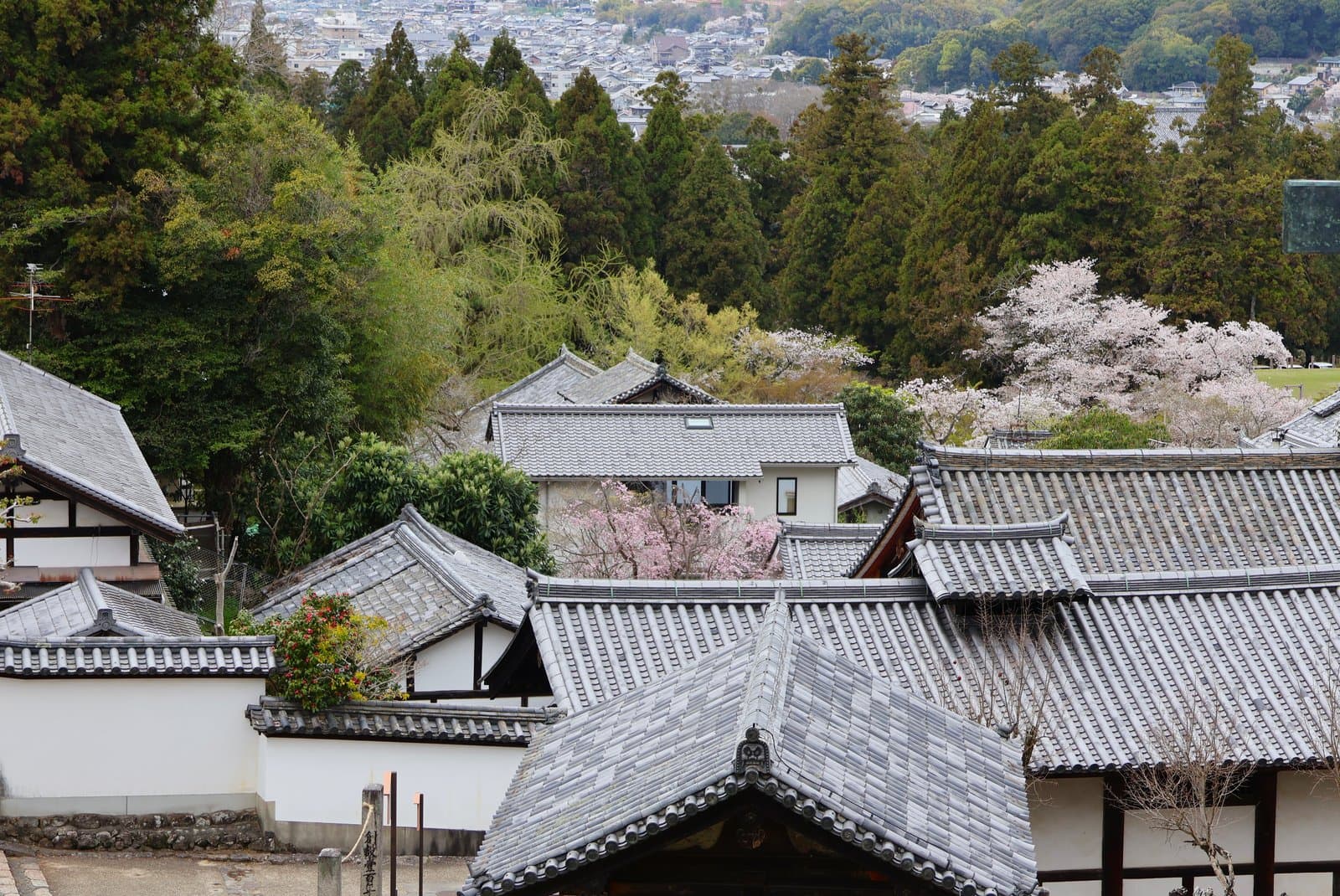 Photo: Photo ACNara, NaraTodai-ji Nigatsu-do HallThe hall known for the Shuni-e ("Omizutori"), the ceremony that heralds spring, named Nigatsu-do ("Second Month Hall") because the ceremony was held here in the second month of the old calendar. It burned during the Shuni-e in Kanbun 7 (1667), and the present hall (National Treasure) was rebuilt two years later. The Shuni-e is held March 1-14.Official check: 26 Sept 2026
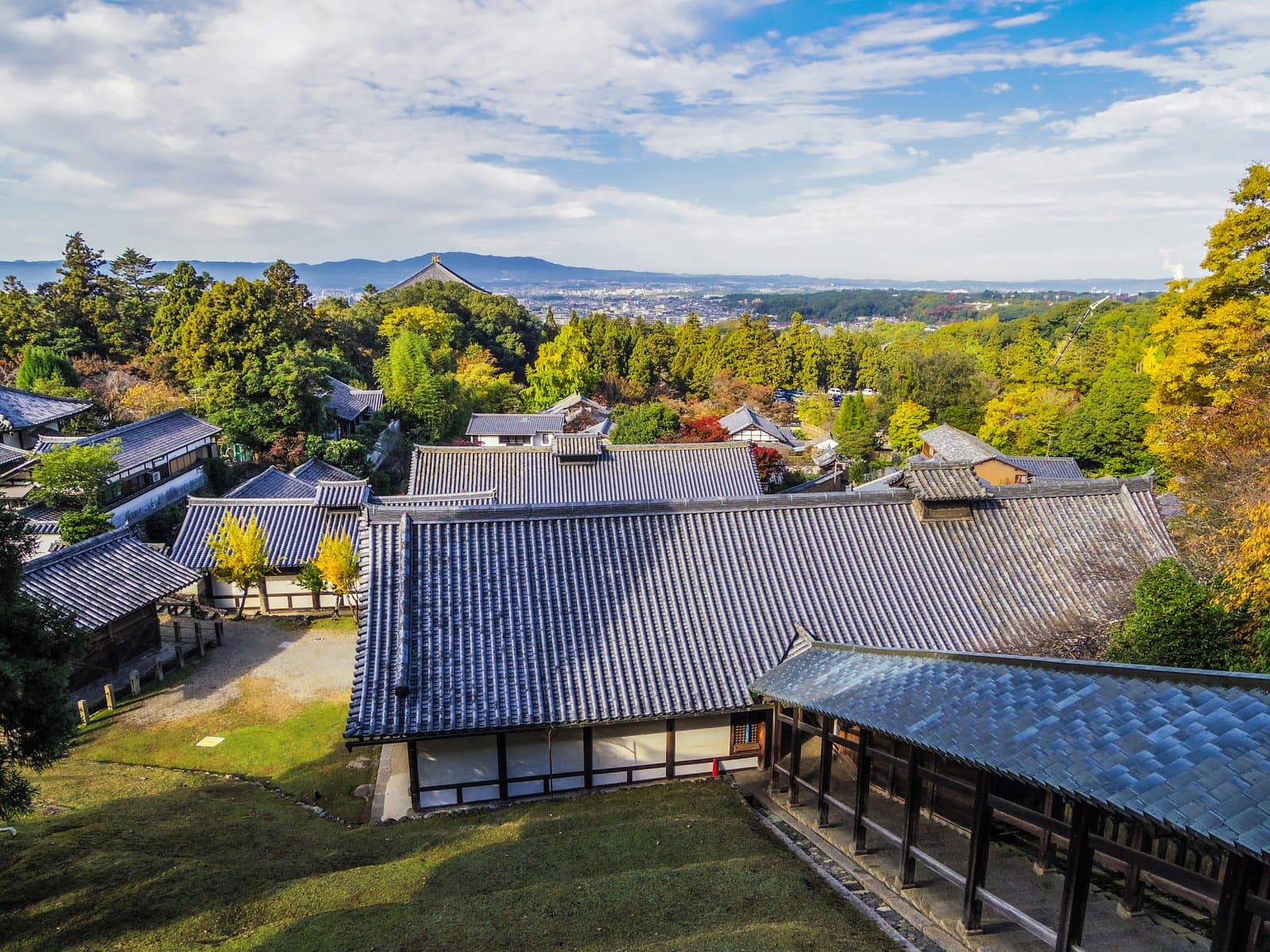 Photo: Photo ACNara, NaraTodai-ji Temple (Great Buddha)A temple founded at the wish of Emperor Shomu in the Nara period, home of the Great Buddha (Rushana Buddha) whose eye-opening ceremony was held in 752; its many National Treasure buildings include the Great Buddha Hall and Nigatsu-do. Part of the World Heritage "Historic Monuments of Ancient Nara".Official check: 26 Sept 2026
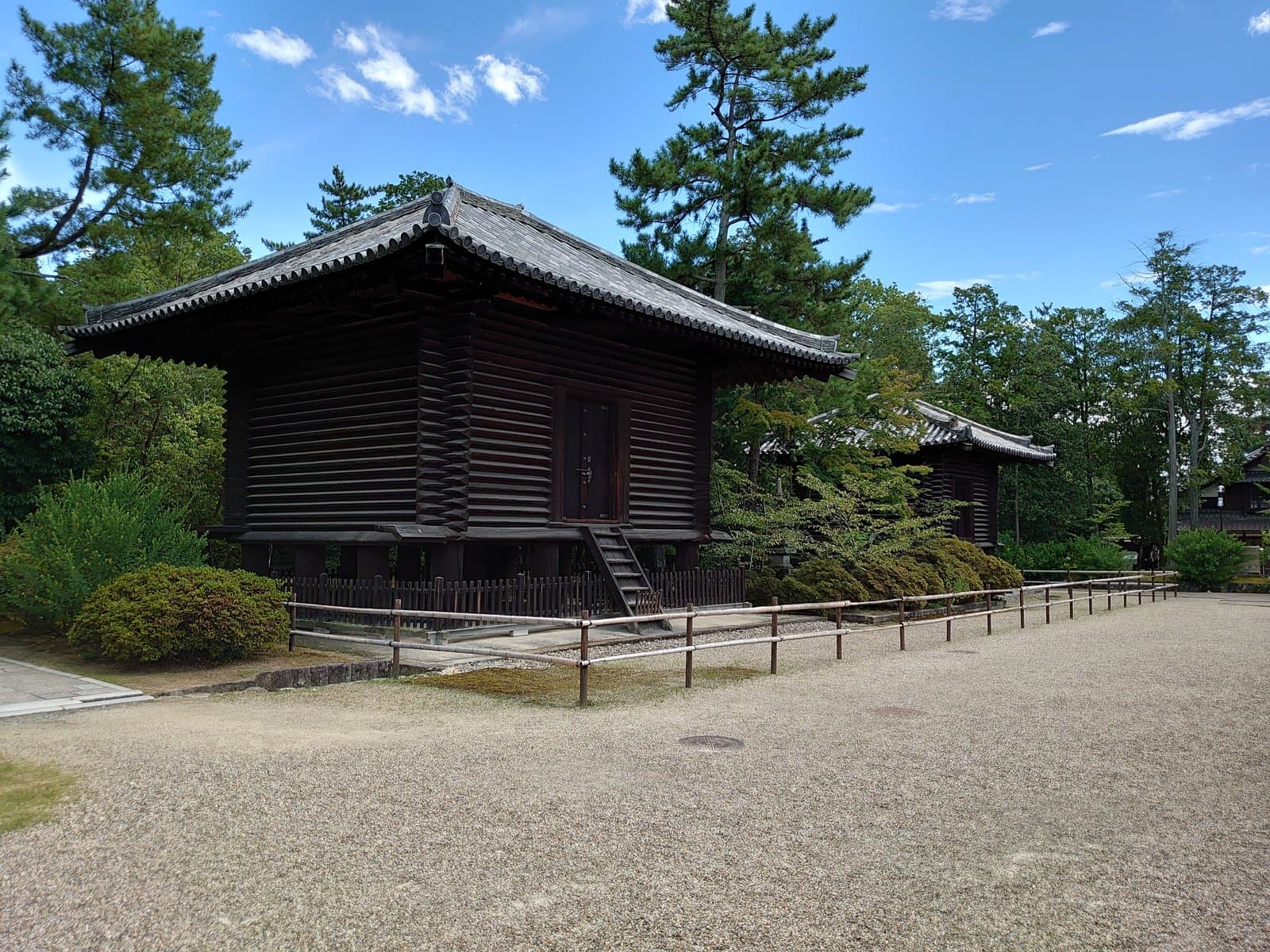 Photo: Photo ACNara, NaraToshodai-ji TempleA temple founded in 759 by the Chinese monk Jianzhen (Ganjin) after years of hardship reaching Japan; unlike most great Nara temples it was a private temple, and its Golden Hall and Lecture Hall are National Treasures. Part of the World Heritage site.Official check: 26 Sept 2026
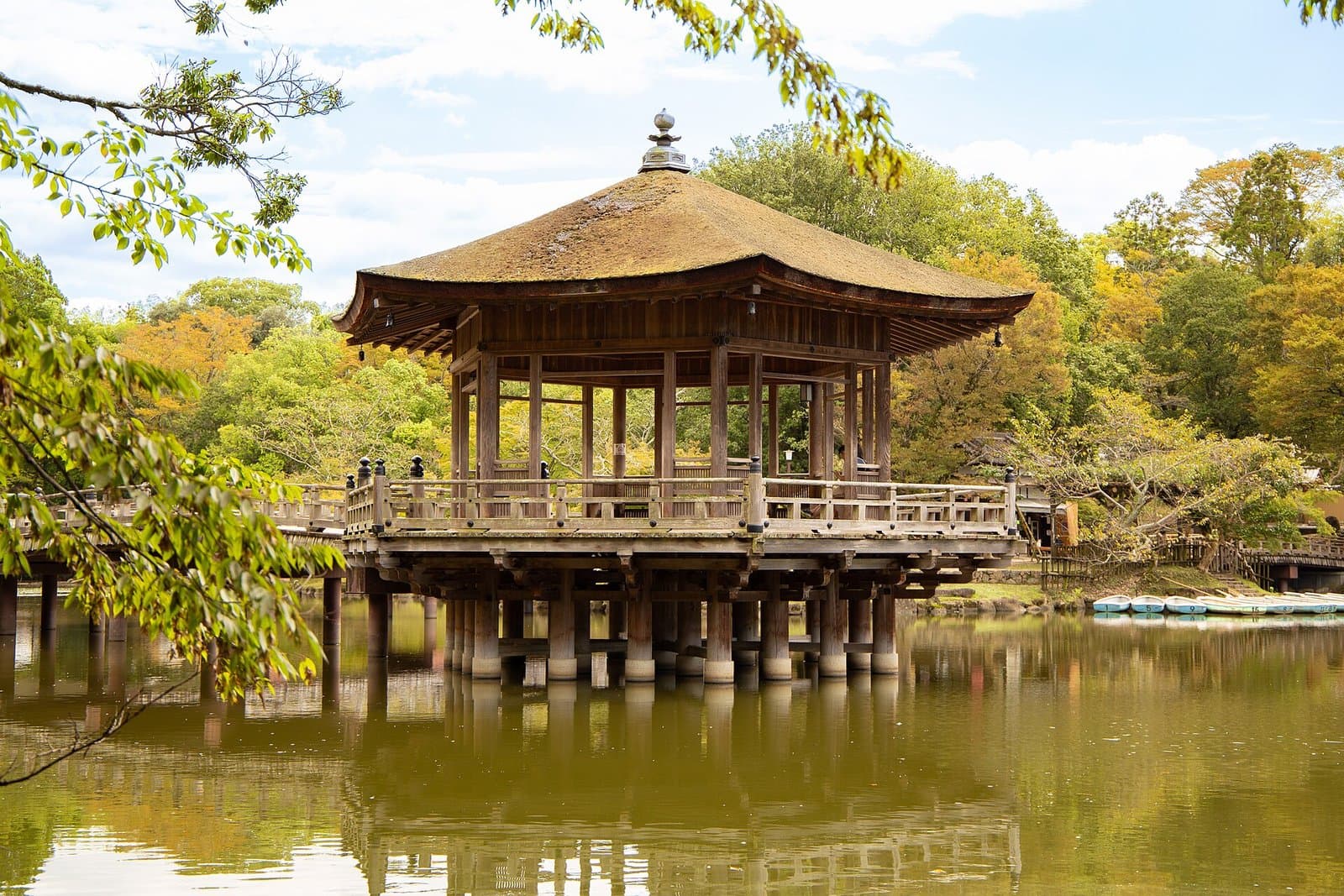 Photo: Ian G Shingler / Wikimedia Commons, CC BY-SA 4.0 (resized)Nara, NaraUkimido PavilionA hexagonal pavilion with a cypress-bark roof floating on Sagi Pond in Nara Park, built in Taisho 5 (1916), restored in 1966 and rebuilt in 1994. It is lit up at night, and the surrounding cherry trees and crape myrtles are beautiful.Official check: 26 Sept 2026
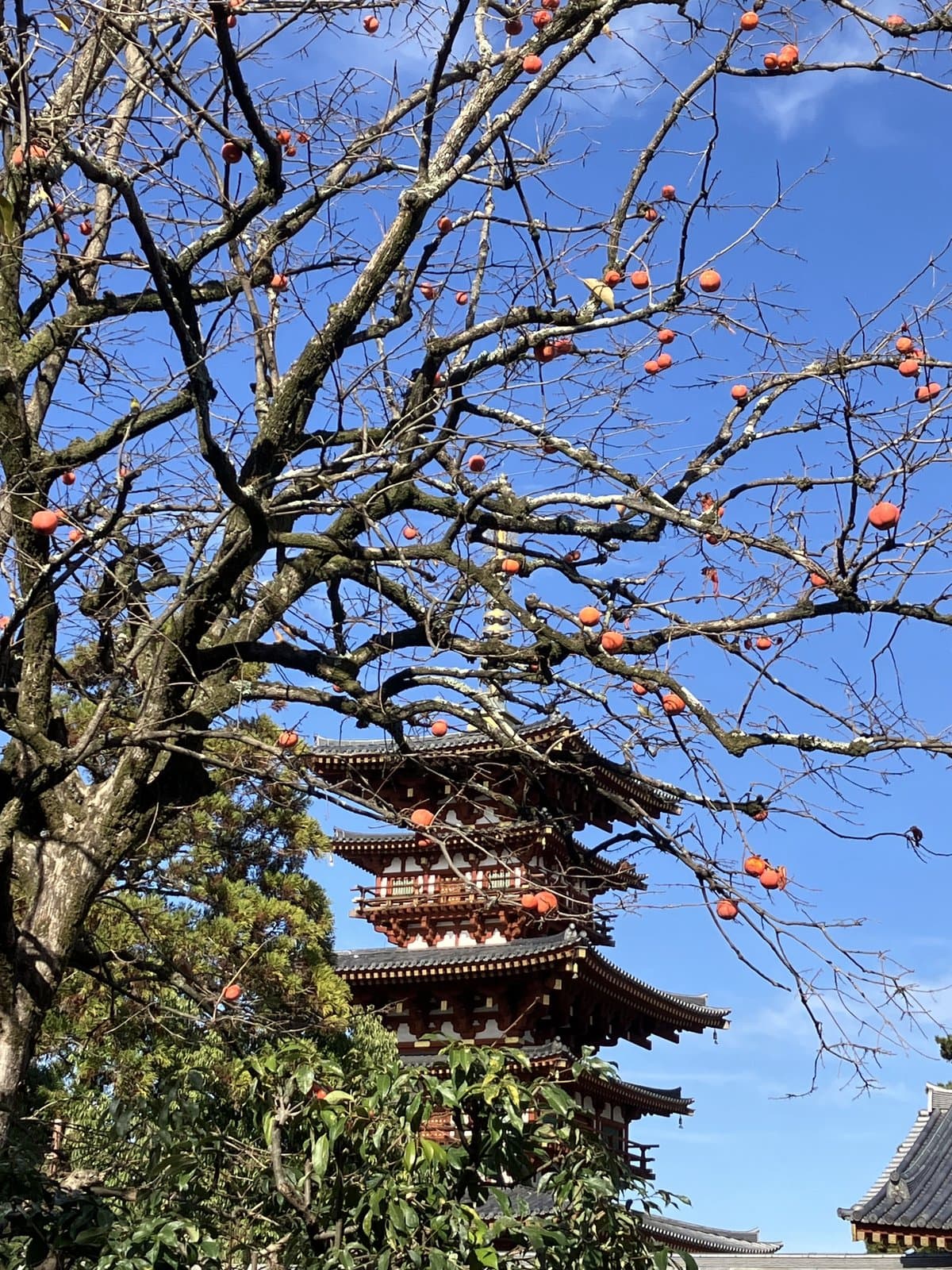 Photo: Photo ACNara, NaraYakushi-ji TempleA temple vowed by Emperor Tenmu for the recovery of his empress (later Empress Jito), completed in Fujiwara-kyo and moved to its present site in Yoro 2 (718). Fire in the 16th century left only the East Pagoda (National Treasure), the sole original structure; since the Kondo in 1976 (Showa 51), the Hakuho-style buildings have been rebuilt one after another. Registered as a World Heritage Site ("Historic Monuments of Ancient Nara") in December 1998.Official check: 26 Sept 2026
- No photo yetTenkawa, NaraDorogawa Onsen Visitor CenterA day-use hot spring opened on April 25, Reiwa 6, in place of the former Dorogawa Onsen Center, with indoor and open-air baths heated by a wood boiler using local thinned timber, plus local products and tourist information.Official check: 26 Sept 2026
- No photo yetNara, NaraHiraso Nara Shop (Kakinoha-zushi)The Nara shop of Hiraso, a maker of kakinoha-zushi (sushi wrapped in persimmon leaves) founded in the Bunkyu era, near Sarusawa Pond in Naramachi; serves the sushi, tea gruel and Miwa somen, and offers a hands-on kakinoha-zushi class.Official check: 26 Sept 2026
- No photo yetIkaruga, NaraHoryu-ji TempleSaid to have been founded in 607 by Prince Shotoku and Empress Suiko, the world's oldest surviving group of wooden buildings; the Five-storey Pagoda, Golden Hall and Yumedono are National Treasures. A World Heritage site since 1993.Official check: 26 Sept 2026
- No photo yetNara, NaraShin-Yakushi-ji TempleFounded in 747 by Empress Komyo to pray for the recovery of the ailing Emperor Shomu, the temple once had a huge golden hall with seven Healing Buddhas, which collapsed in a storm in 962. The present main hall, a Tenpyo-period (Nara period) building with a gently curving roof and large white walls, enshrines a seated Yakushi Nyorai surrounded by standing statues of the Twelve Heavenly Generals from the Nara period.Official check: 20 Oct 2026
- No photo yetKatsuragi, NaraTaima-dera TempleAn ancient temple in the "west" of old Yamato with a large Hakuho- and Tenpyo-style precinct, and the only temple in Japan where a pair of ancient three-storied pagodas, east and west, still stand. Its principal image is the Taima Mandala, said to depict the Pure Land as seen by Princess Chujo in the Nara period, kept in a National Treasure shrine in the Mandala Hall (main hall). The Naka-no-bo sub-temple has the Kogu-en garden, a designated Place of Scenic Beauty, famous for spring peonies.Official check: 20 Oct 2026
- No photo yetSakurai, NaraTanzan ShrinePrince Naka-no-Oe (later Emperor Tenji) and Nakatomi no Kamatari (later Fujiwara no Kamatari) are said to have held a secret meeting in the hills behind the shrine, under wisteria in bloom, which led in 645 to the overthrow of Soga no Iruka and the Taika Reform; the shrine's name comes from this "talk" (dan). In 678 Kamatari's eldest son brought part of his father's remains to the summit of Tonomine and built a thirteen-storied pagoda, and in 701 a shrine with his statue was built, the origin of Tanzan Shrine.Official check: 20 Oct 2026