
Travel Etiquette · 公開 2026-09-29 · 更新 2026-09-29
事実の最終確認 2026-09-29 · 次の見直し 2027-03-01
Visiting temples and shrines in Japan: the rules they actually post
Shrines are places of worship, not public facilities. Here is what 71 temples and shrines say on their own pages about worship, photos, clothing, food, pets and goshuin, with real examples.

Temples and shrines in Japan are active places of worship, not just sights. One shrine on this site says it plainly: it is a religious site, not a public facility, and it may refuse behavior unsuitable for a place of worship.
We read what temples and shrines on this site say on their own official pages.
What we looked at
- Base: 71 of the 242 published temples and shrines on this site have etiquette notes from their official pages, checked 2026-09-24 to 2026-09-27.
- Method: text search on 2026-09-29, then a read of the matches. The numbers are "at least".
| Note mentions | Temples and shrines (at least) |
|---|---|
| Pets or dogs | 16 |
| Photos | 14 |
| Worship or prayer | 12 |
| Eating or drinking | 11 |
| Smoking | 10 |
| Shoes | 5 |
| Clothing or exposed skin | 4 |
How to pray
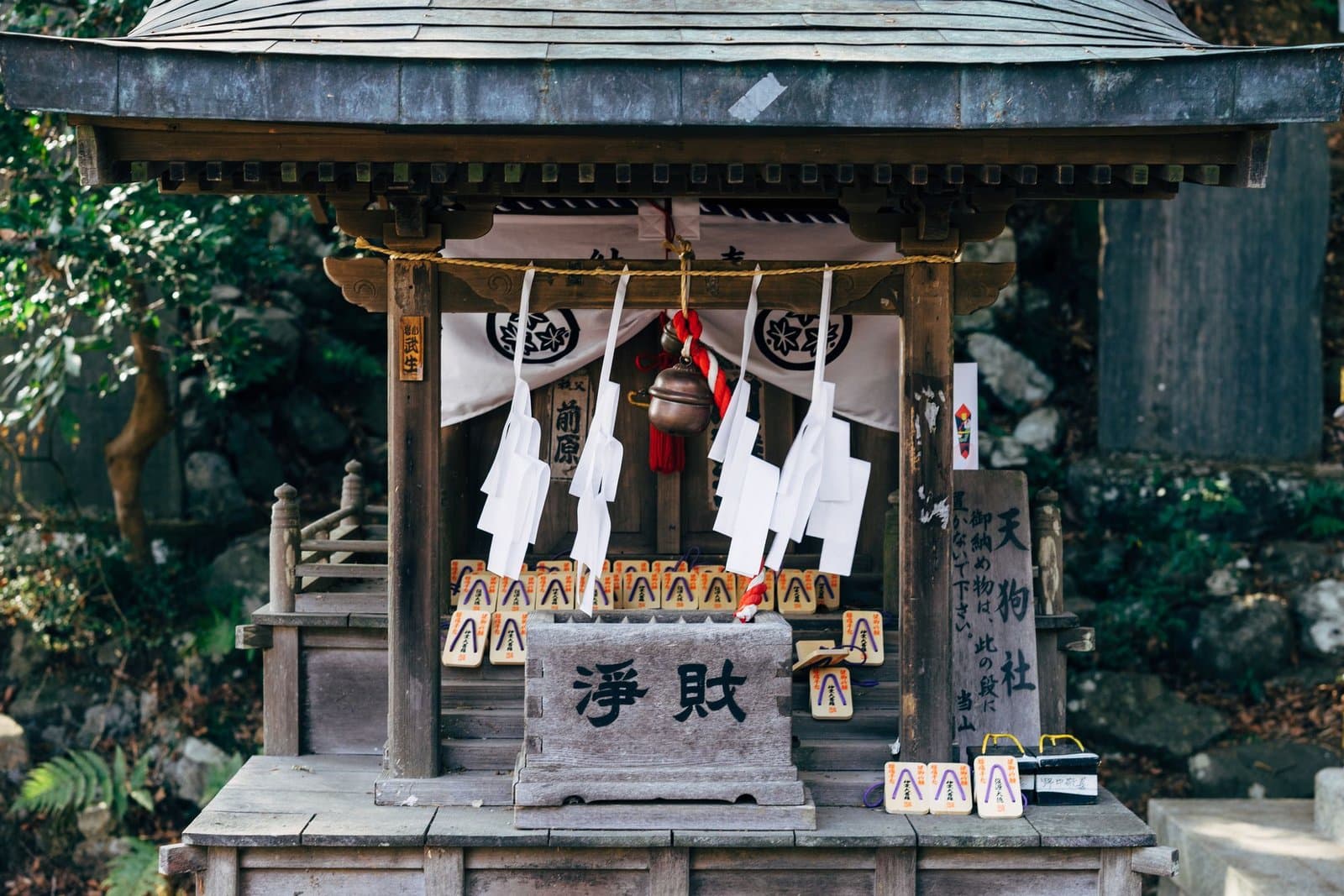
Different shrines can have their own way. Izumo Taisha asks visitors to worship with two bows, four claps and one bow, and to do the same at every shrine in its grounds. Follow the sign at the shrine you are visiting.
Some places are sacred in ways that go further than sightseeing. At Omiwa Shrine, Mt. Miwa is a sacred mountain with restricted entry; climbing it is described as an act of worship, not hiking, and you must register at an auxiliary shrine first. Yudonosan Jinja asks that shoes are not worn while worshipping, and forbids photography at the main shrine.
Photos: ask yourself if you are in the way
- Osaki Hachimangu, Sendai: take photos without disturbing other worshippers; shoots with a hired photographer need an application and a fee.
- Saifukuji Kaisando: photography inside the temple is normally prohibited, except in limited periods.
More in Photo and drone rules at Japanese sights.
Clothing
Nanzoin, Fukuoka: visitors showing skin or tattoos cannot enter; cover the shoulders and stomach and wear clothing to the knees. Camisoles and tank tops are not allowed.
Most temples and shrines in our data do not post a dress code. Modest clothing is still the safe choice.
Food, smoking and pets
Several places in our data ban smoking, eating while walking, or pets in the grounds. See Can you eat while walking in Japan?.
Goshuin (temple and shrine stamps)
Goshuin are handwritten seals given to visitors. They are tied to the visit. Zuiganji in Matsushima says that from October 1, 2026, goshuin are not given to people who do not visit the temple.
Quiet, day and night
Todaiji Nigatsudo in Nara can be visited at any hour, but asks visitors to be quiet at night.
A simple rule of thumb
- Follow the sign at the gate. It may differ from what you read elsewhere.
- Let worshippers go first, and do not block paths for photos.
- Dress modestly, and keep food, cigarettes and pets outside unless the place says otherwise.
- Take goshuin only when you have visited.
Sources
- Etiquette notes for each temple and shrine: the official page linked on each spot page (checked 2026-09-24 to 2026-09-27)
- Counts in this article: Verified in Japan etiquette notes, text search on 2026-09-29