
Practical Travel · Published 2026-11-02 · Updated 2026-11-02
Facts last checked 2026-11-02 · Next review 2027-09-15
When do the leaves turn in Japan? The official maple and ginkgo dates by city
Japan's weather agency records the day most leaves on one sample maple or ginkgo have turned. How to read those dates, with normals for 11 cities.
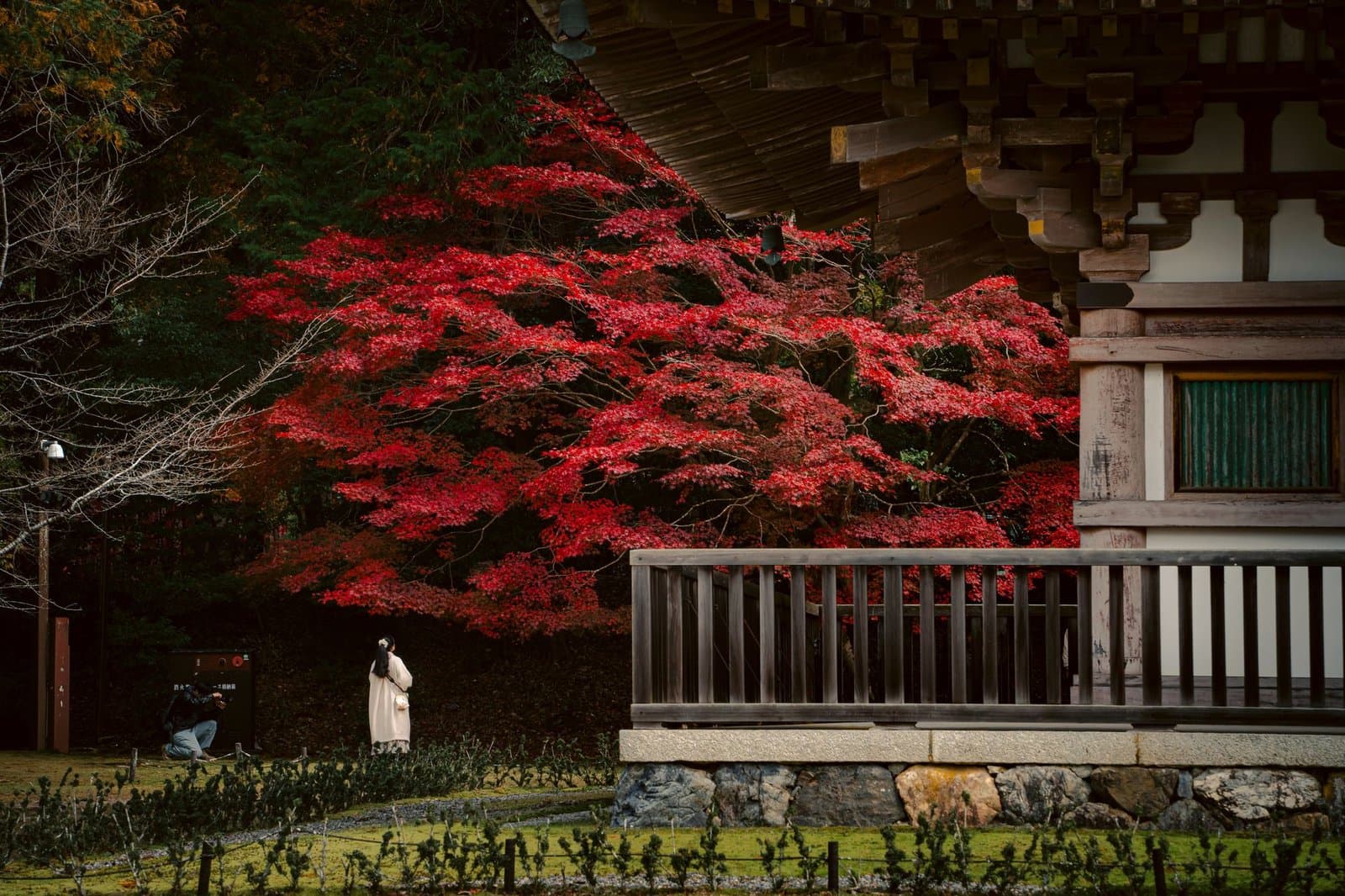
You are planning an autumn trip to Japan and want to see red maples or yellow ginkgo trees. The dates you see online vary a lot. One set of dates is official: the Japan Meteorological Agency (JMA) observes the color change on specific trees at weather stations, under fixed rules, and publishes the results.
This article explains those rules and shows what the JMA's figures say for 11 cities, using JMA pages checked on 2026-11-02. We do not give forecasts. The JMA pages we used publish observations, not predictions.
What the JMA observes
The JMA observes two autumn events for leaves:
| Tree | Japanese | Official definition |
|---|---|---|
| Maple: "leaf coloring date" | かえでの紅葉日 (kaede no kōyō-bi) | The first day when, looking at the whole sample tree, most of the leaves have turned red |
| Ginkgo: "yellow leaf date" | いちょうの黄葉日 (ichō no ōyō-bi) | The first day when, looking at the whole sample tree, most of the leaves have turned yellow |
So the official date is not the first red leaf. It is the day the tree as a whole has changed color. The JMA also observes the day the leaves fall for both trees.
The sample tree
Each date comes from one designated sample tree (標本木, hyōhonboku) per station.
- For maple, the JMA mainly observes iroha-kaede (いろはかえで), which grows wild in the mountains from southern Tohoku to Kyushu and is planted in many parks and gardens for its autumn color. Where it does not grow, the JMA observes yama-momiji, ō-momiji or itaya-kaede instead. Sapporo, for example, is marked as observing yama-momiji.
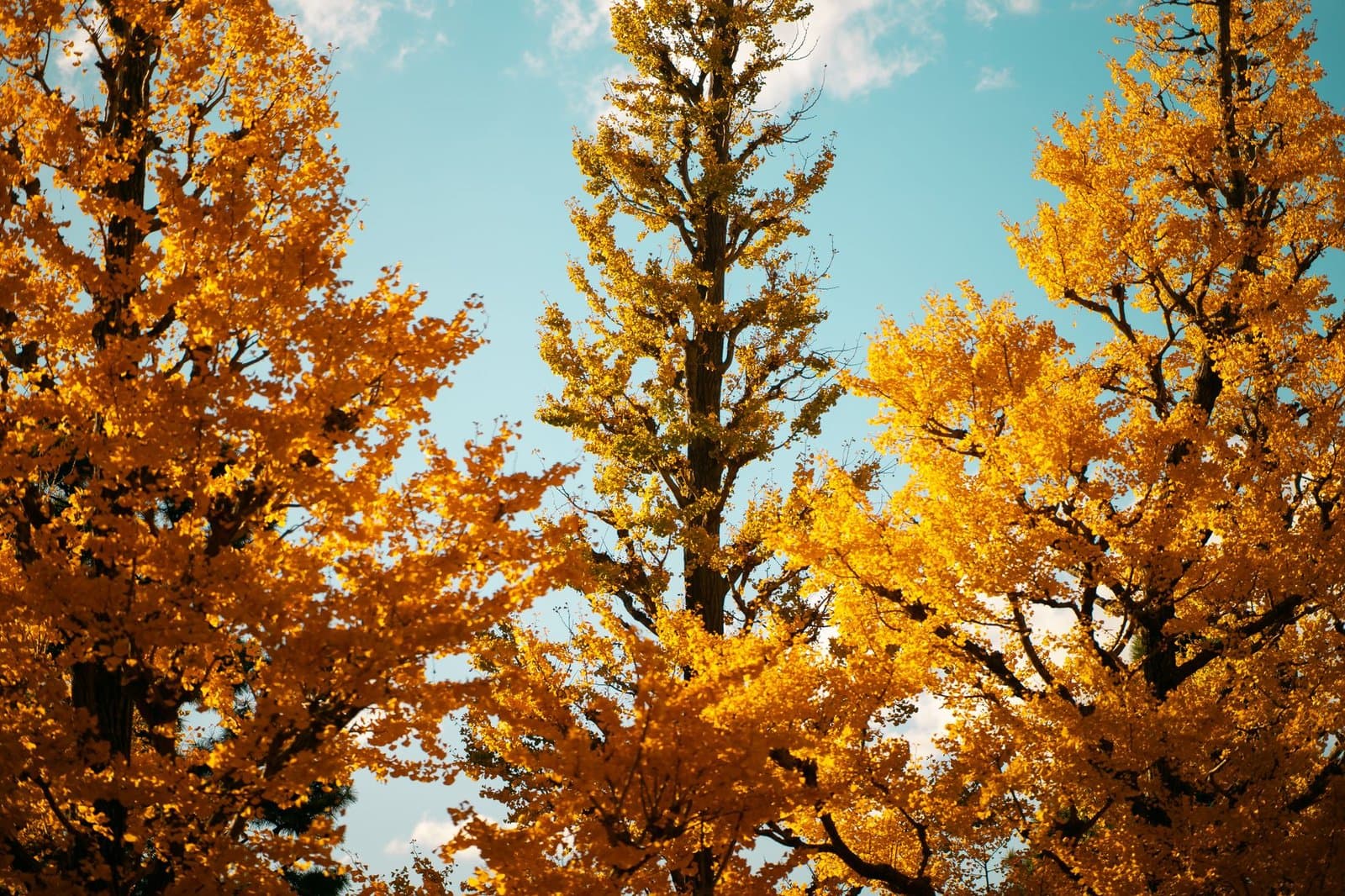
- Ginkgo is a tall deciduous tree said to come from China. The JMA notes that it is planted in many shrine and temple grounds and along streets.
One city's official date therefore describes one tree. Trees in a valley, on a mountain or in a sunny garden across town can change earlier or later.
How the season moves across Japan
The JMA's summaries, based on the 1991-2020 normals, describe the season moving south and toward the coasts:
- Maple: starts in mid-October in the eastern Pacific side of Hokkaido. Reaches Tohoku and eastern Hokuriku by November 20, and Kanto, Hokuriku, Tokai, Chugoku, Shikoku and northern Kyushu by November 30. The Pacific coasts of Kanto and Tokai, Kinki and southern Kyushu follow in early to mid-December.
- Ginkgo: starts in late October in the eastern Pacific side of Hokkaido and the Pacific side of Tohoku. Reaches the Sea of Japan side of Hokkaido and Tohoku by November 10, Hokuriku to Tokai by November 20, and the Pacific coasts of Kanto and Tokai, Kinki, Chugoku, Shikoku and Kyushu around the end of November or early December.
Dates by city
The JMA's tables give each station's observed date for 2025 and 2026, and how many days that date was from the normal (平年値, the 1991-2020 average). A plus sign means later than normal; a minus sign means earlier. In the table, the normal is our calculation: the 2025 date minus its difference from the normal.
| City | Maple 2025 | Difference | Maple normal | Ginkgo 2025 | Difference | Ginkgo normal |
|---|---|---|---|---|---|---|
| Sapporo | Nov 6 | +9 | Oct 28 | Nov 7 | +3 | Nov 4 |
| Sendai | Nov 20 | -1 | Nov 21 | Nov 21 | -2 | Nov 23 |
| Kanazawa | Nov 25 | +1 | Nov 24 | Nov 4 | -6 | Nov 10 |
| Tokyo | Nov 23 | -5 | Nov 28 | Nov 22 | -1 | Nov 23 |
| Nagoya | Nov 25 | -3 | Nov 28 | Nov 10 | -8 | Nov 18 |
| Kyoto | Dec 10 | +5 | Dec 5 | Nov 25 | +1 | Nov 24 |
| Nara | Nov 14 | -7 | Nov 21 | Nov 18 | 0 | Nov 18 |
| Osaka | Dec 4 | +3 | Dec 1 | Nov 25 | +3 | Nov 22 |
| Hiroshima | Nov 27 | +5 | Nov 22 | Nov 21 | +6 | Nov 15 |
| Fukuoka | Dec 1 | 0 | Dec 1 | Dec 6 | +16 | Nov 20 |
| Kagoshima | Dec 2 | -13 | Dec 15 | Dec 2 | +7 | Nov 25 |
Two things stand out. In most of these cities the official dates fall in the second half of November or early December, later than many visitors expect. And single years move a lot: in 2025, Fukuoka's ginkgo was 16 days later than normal and Kagoshima's maple 13 days earlier.
How to plan around the official dates
- Treat the normal as the middle of a range. In 2025 these cities ranged from 13 days early to 16 days late.
- Remember what the date means. On the official date most of the sample tree has already turned. Color starts before it, and the leaves stay for a while after it, until the JMA records them falling.
- Check the current season yourself. The JMA's pages for maple and ginkgo list this year's dates as stations observe them. The pages are in Japanese; look for your city's name in the left column. On 2026-11-02, the 2026 column had maple dates for Asahikawa (October 29), Obihiro (October 30) and Kushiro (October 22), and a ginkgo date for Kanazawa (October 26, 15 days earlier than normal). Other cities were not yet observed.
- Expect crowds and changed hours. Popular gardens and temples often change hours or fees in autumn. See our guides to peak seasons at Japanese sights and avoiding crowds with reservations.
What can change
- Normals: the current normals are the 1991-2020 average. When the JMA moves to a new averaging period, the dates in our table can shift.
- Sample trees and species: a station can switch trees, and some stations observe a different maple species.
- This season's dates: added to the JMA pages from October to December as each station observes them.
- Observed items and pages: the JMA stopped observing some items at the end of 2020; the list could change again.
Next review: 2027-09-15, before the 2027 season.
Sources
- Japan Meteorological Agency, "Phenological observation information" (in Japanese): https://www.data.jma.go.jp/sakura/data/index.html (checked 2026-11-02)
- Japan Meteorological Agency, "Maple leaf coloring date" (PDF, in Japanese, with 1991-2020 normal isochrone map): https://www.data.jma.go.jp/sakura/data/kaede2020.pdf (checked 2026-11-02)
- Japan Meteorological Agency, "Ginkgo yellow leaf date" (PDF, in Japanese, with 1991-2020 normal isochrone map): https://www.data.jma.go.jp/sakura/data/ichou2020.pdf (checked 2026-11-02)
- Japan Meteorological Agency, "Maple leaf coloring dates (2025-2026)" (in Japanese): https://www.data.jma.go.jp/sakura/data/phn_014.html (checked 2026-11-02)
- Japan Meteorological Agency, "Ginkgo yellow leaf dates (2025-2026)" (in Japanese): https://www.data.jma.go.jp/sakura/data/phn_012.html (checked 2026-11-02)